
Should you put yeast in your septic tank?
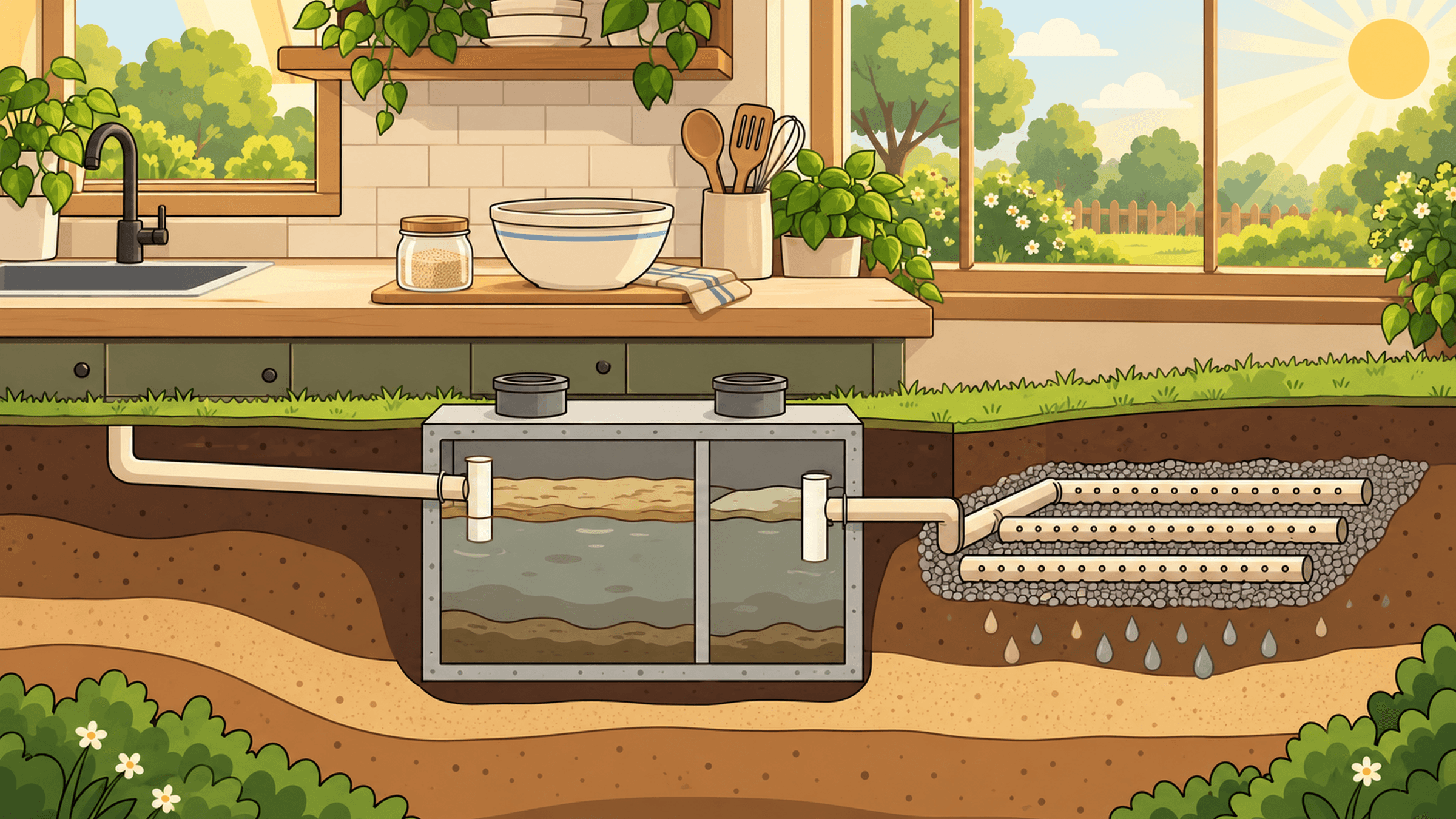
Flushing a packet of baker’s yeast down the toilet is one of the oldest septic home remedies around. It’s cheap and sounds natural, so the idea keeps getting passed along. Here is what septic experts actually say about it.
What the experts say about yeast
Sara Heger, a researcher and instructor in the Onsite Sewage Treatment Program at the University of Minnesota, answered this question directly in a 2018 column for septic installers. Her points, in plain terms:
- Yeast is likely not harmful to a septic system.
- There is no research-based information showing it is a useful practice.
- Yeast can break down starches, but starches are a small share of what goes into a tank.
- Yeast does not break down the fats, oils and soaps that make up the scum layer.
- Adding dried yeast to a tank is, in her comparison, like dropping a teaspoon of salt into the ocean: the microbes already in the tank vastly outnumber it.
She also notes that people report less sludge and scum after using yeast, but those reports are anecdotal, not measured.
Why your tank doesn’t need it
A septic tank runs on the microbes that arrive with household wastewater every day. The University of Arizona Cooperative Extension says a household normally adds more than enough of the right kind of bacteria to its septic system, so there is no need for additives.
The EPA agrees. Asked whether additives are recommended, it says no: septic systems already contain the bacteria, yeasts, fungi and other microorganisms they need, and some additives can be ineffective or even harm the system. Its sharpest warning is for chemical additives made with organic solvents or strong alkali. Oregon State University Extension says biological and chemical additives are not needed to speed up settling or decomposition in a septic tank.
The University of Rhode Island lists yeast together with bacteria as a biological additive, and its answer is the same for all of them: by design, a septic system does not need help doing its job.
What yeast can’t do
Whatever you flush, some things don’t change:
- It can’t replace pumping. Heger points out that yeast, bacteria and everything else can’t digest sand, grit or bits of plastic. They build up and have to be pumped out. See how often to pump your septic tank.
- It can’t fix a failing system. Slow drains, backups, odors or soggy ground over the drain field need a septic professional.
- Faster breakdown isn’t always better. The University of Rhode Island warns that biological additives can break solids into small pieces that stay suspended in the liquid and flow out to the drain field, where they can contribute to clogging.
If you worry about your tank’s bacteria
Most people reach for yeast because they think the tank’s bacteria need a boost. In a normal home they don’t, but what you pour down the drain does matter. The University of Arizona says heavy use of bleach, antibacterial and disinfectant products can seriously reduce the bacteria in a septic system, while normal use as directed lets them recover quickly. It also notes that added bacteria may not make up for excessive use of those products.
So if you want to help your tank, the better move is to use cleaners and bleach in label amounts. Our guide on bleach and septic systems explains how.
If you’re tempted to try it
If you have already flushed a packet of yeast, there’s no need to worry: experts consider it unlikely to cause harm. Just don’t let it change your maintenance plan. If you were thinking of yeast because of a specific problem, that problem deserves a closer look:
| What you noticed | What it may mean | What to do |
|---|---|---|
| Sewage smell inside | Often a dry drain trap or a blocked vent | See our guide on septic smell in the house |
| Slow drains everywhere, gurgling | Tank may be full | Call a licensed septic company |
| Wet or spongy ground over the drain field | Possible drain field problem | Call a licensed septic company soon |
| Nothing wrong, just want to “help” the tank | Your system already has what it needs | Keep the pumping and inspection schedule |
Never open a septic tank and lean in to pour something in, and never climb inside. Oregon State University Extension warns that the gases in a septic tank can kill a person very quickly.
What actually keeps a septic tank healthy
The advice in the EPA’s septic care guide comes down to a few habits:
- Have the system inspected at least every 3 years and the tank pumped every 3 to 5 years, or as your tank size and household require.
- Flush only human waste and toilet paper.
- Keep grease, chemicals and large amounts of cleaners out of the drains.
- Spread laundry and other heavy water use across the week.
For a broader look at store-bought products, read do septic tank treatments work?, which applies the same expert view to every type of additive, including ours.
Common questions
How much yeast do you put in a septic tank?
We can't give you a dose, because no research-based source supports using yeast in a septic tank at all. A University of Minnesota specialist says it is likely harmless but not shown to be useful. If you are worried about your tank, have it inspected and pumped instead.
Can yeast harm a septic system?
Probably not in small amounts. Sara Heger of the University of Minnesota writes that yeast is likely not harmful to a septic system. The bigger risk is trusting it to fix a problem that needs pumping or a repair.
Is yeast better than a store-bought septic treatment?
Neither is needed for a healthy system, according to the EPA and university extension services. The University of Rhode Island groups yeast with other biological additives and says the system needs only the bacteria it receives from wastewater. No yeast or product digests sand, grit or plastic.
Does yeast help after the tank is pumped?
No. The University of Rhode Island says a septic system does not need a head start after pumping. Normal use of the house brings new bacteria into the tank right away.
Sources
- U.S. EPA SepticSmart: How to Care for Your Septic System
- Onsite Installer: Does adding yeast improve septic system functioning? (Sara Heger, University of Minnesota, 2018)
- U.S. EPA: Frequent Questions on Septic Systems (additives)
- University of Rhode Island Cooperative Extension: Additives and Your Onsite Wastewater Treatment System (2009)
- Oregon State University Extension, EC 1343: Septic tank maintenance (revised 2022)
- University of Arizona Cooperative Extension, AZ1258: Antibacterial Products in Septic Systems (revised 2018)
A simple monthly routine for your tank
BT-DW is one pod a month that adds 75 billion+ Bacillus spores to your tank to help break down organic waste between pumpings. It complements routine pumping; it does not replace it.