
Can a septic system freeze? Winter septic care
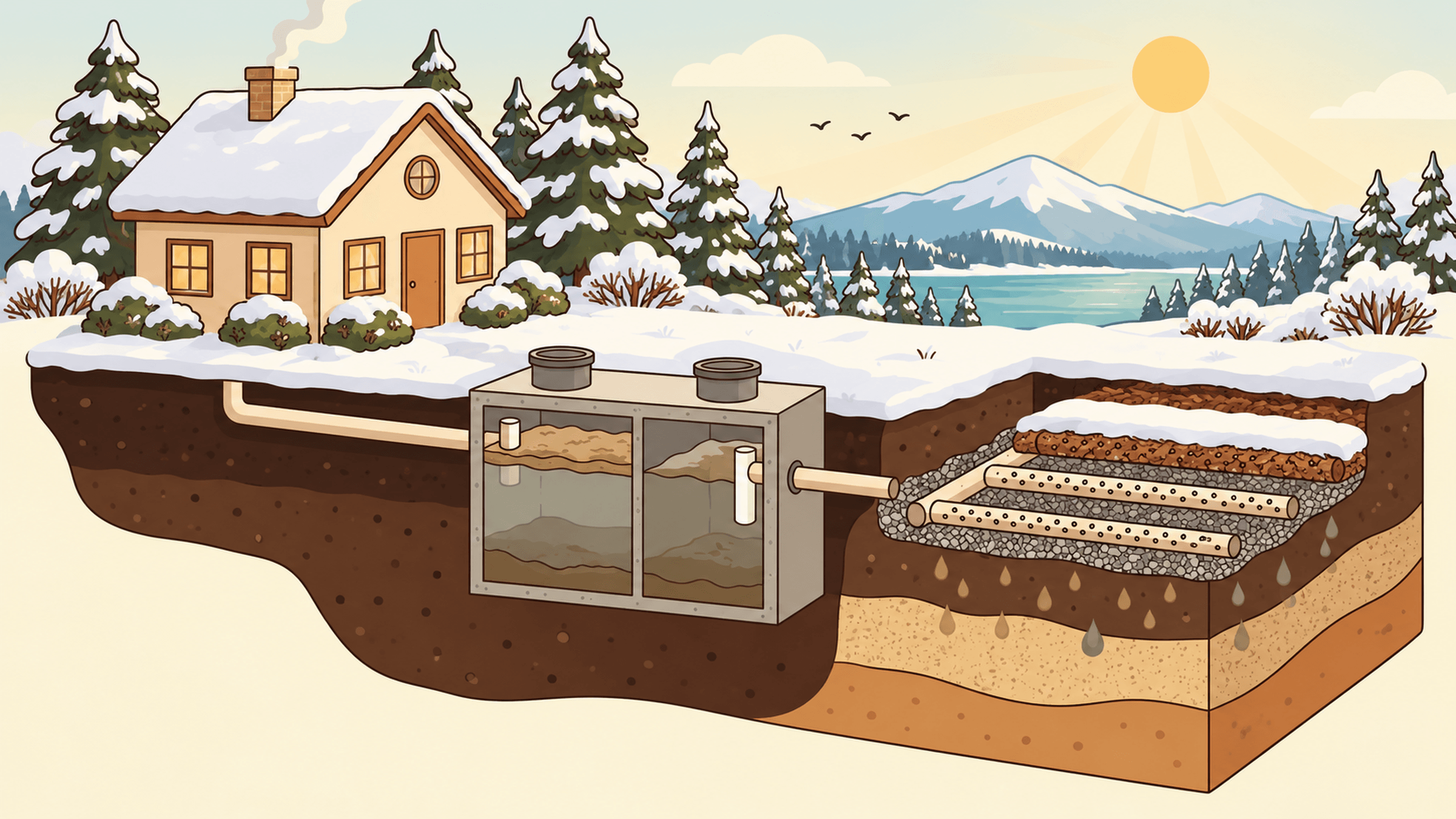
Septic systems in cold states can freeze, but most never do. Freeze-ups tend to happen in a very cold winter with little snow, and the weak spot is usually a pipe, not the tank.
Why a septic system freezes
Wastewater arrives warm, and the soil, grass and snow above the system hold that heat in. A freeze happens when something breaks that balance. The University of Minnesota’s Onsite Sewage Treatment Program and NDSU Extension name the usual causes:
- Little or no snow. Snow is an insulating blanket. NDSU Extension notes that more than 12 inches of snow gives significant frost protection, while a cold, snowless winter lets frost go deep.
- Compacted snow or soil. Cars, snowmobiles, ATVs, foot traffic and plowing pack the snow down and drive frost deeper.
- A slow trickle. A leaking toilet or faucet, or a high-efficiency furnace that drips, sends a thin film of water down the pipe that can freeze layer by layer until the pipe is solid.
- Irregular use. When a home or cabin sits empty, or only one or two people live there, too little warm water enters the system.
- Pipes that sag. A dip or low spot holds water, and standing water freezes.
- Open risers. Uncapped or broken risers, inspection pipes and lids let cold air in.
- A soggy drain field. A system that was already wet or failing freezes easily.
NDSU adds that a house sewer pipe buried less than 4 feet deep without extra insulation is at high risk in a cold winter, and that new systems on bare soil often freeze in their first year.
Signs your system may be frozen
- Drains slow down or back up all over the house during a cold spell.
- If you have a pump tank, you hear the pump running constantly. The University of Minnesota says to shut the pump off and call a professional if that happens.
- Wastewater seeps out at the surface or out of the side of a mound.
The roof vent can freeze too, according to the EPA’s septic FAQ, which can bring sewer smells into the house. Our guide on septic smells in the house covers that case.
How to prevent a freeze
You don’t need to do all of these. Pick the ones that fit your system and your winter.
- Leave the snow alone. Don’t plow or shovel snow off the tank, the pipes or the drain field. A snow fence can trap extra snow over them.
- Keep traffic off. No vehicles, snowmobiles or livestock on any part of the system, in winter or any time.
- Mulch in the fall. The University of Minnesota and the University of Nebraska-Lincoln (UNL) suggest 8 to 12 inches of straw, leaves or hay over the pipes, tank and drain field, especially for a new system without grass yet.
- Let the grass grow a little longer in late summer and fall over the tank and drain field. It insulates and holds snow.
- Fix leaks. A dripping fixture is one of the most common causes of frozen pipes.
- Use water normally, and warm. Spread laundry and dishwasher loads over the day and the week. Don’t leave water running all the time: it overloads the system.
- Cap and insulate risers, inspection pipes and the manhole lid.
- Plan for time away. UNL suggests having someone run a load of laundry or dishes while you are gone. For seasonal or vacant homes, a professional can add insulation or a tank heater.
What to do if your septic system freezes
Call a septic professional first. They can find the frozen spot with a camera and thaw pipes with steamers or high-pressure jetters, or add heat tape or a tank heater. The University of Minnesota warns that unless the cause is corrected, the system will likely freeze again next winter.
If the drain field itself is full of ice, it cannot accept water until spring. In that case the tank may have to work as a holding tank, pumped whenever it fills. That gets expensive, so cut water use: fewer flushes, short showers, full dishwasher loads, laundry at a laundromat.
Do not add antifreeze, salt or any septic additive. Do not light a fire over the system, pump sewage onto the ground, or run water nonstop to thaw it. And never climb into or lean into a septic tank: the gases inside can kill a person very quickly.
If the mulch idea sounds tempting once the system is already frozen, wait. The University of Minnesota says mulching a frozen system delays thawing in spring.
After the thaw
Once spring comes, have a professional figure out why it froze: a sagging pipe, thin cover, a leaky fixture or a drain field that was already struggling. Fixing the cause in the warm months is far easier than fighting it in January. The EPA notes that spring is a good time to service a septic system, so it is a natural moment for an inspection and, if it’s due, a pumping. Our guides on how often to pump and how a drain field works help you plan the rest.
Common questions
Can a leach field freeze?
Yes. The University of Minnesota lists a drain field that was already soggy or failing as a prime candidate to freeze, along with thin snow cover and compacted soil. If the drain field is full of ice, it cannot take water until it thaws in spring. A septic professional can tell you whether the tank has to be used as a holding tank until then.
Do I need to winterize my septic system?
Most year-round homes don't need anything special beyond good habits: keep snow cover, keep traffic off the system, cap the risers and fix leaky fixtures. If you leave for weeks in winter, or the system froze before, plan ahead with a professional. Options include extra insulation, a tank heater, someone using water in the house while you are away, or pumping the tank before you leave.
Can septic tanks be pumped in the winter?
Yes. Pumpers work in winter, and a frozen system is often managed by pumping the tank on a regular basis until it thaws. The University of Minnesota suggests pumping before a long winter absence in some cases, but only if your tank was designed for a high water table when you have one. Keep the lid area marked so the pumper can find it under the snow.
Should I put antifreeze in my septic system?
No. The University of Minnesota says not to add antifreeze, salt or a septic additive to a frozen system, and the EPA lists antifreeze among the household chemicals that should never go down the toilet.
Sources
- University of Minnesota Onsite Sewage Treatment Program: Freezing Problems & Septic Systems (fact sheet, hosted by the City of Crosslake, MN)
- NDSU Extension: Precautions Can Prevent Frozen Septic Systems (2014)
- University of Nebraska-Lincoln Water: Water and wastewater in winter weather
- U.S. EPA: Frequent Questions on Septic Systems
A simple monthly routine for your tank
BT-DW is one pod a month that adds 75 billion+ Bacillus spores to your tank to help break down organic waste between pumpings. It complements routine pumping; it does not replace it.