
Septic-safe toilet paper: what actually matters
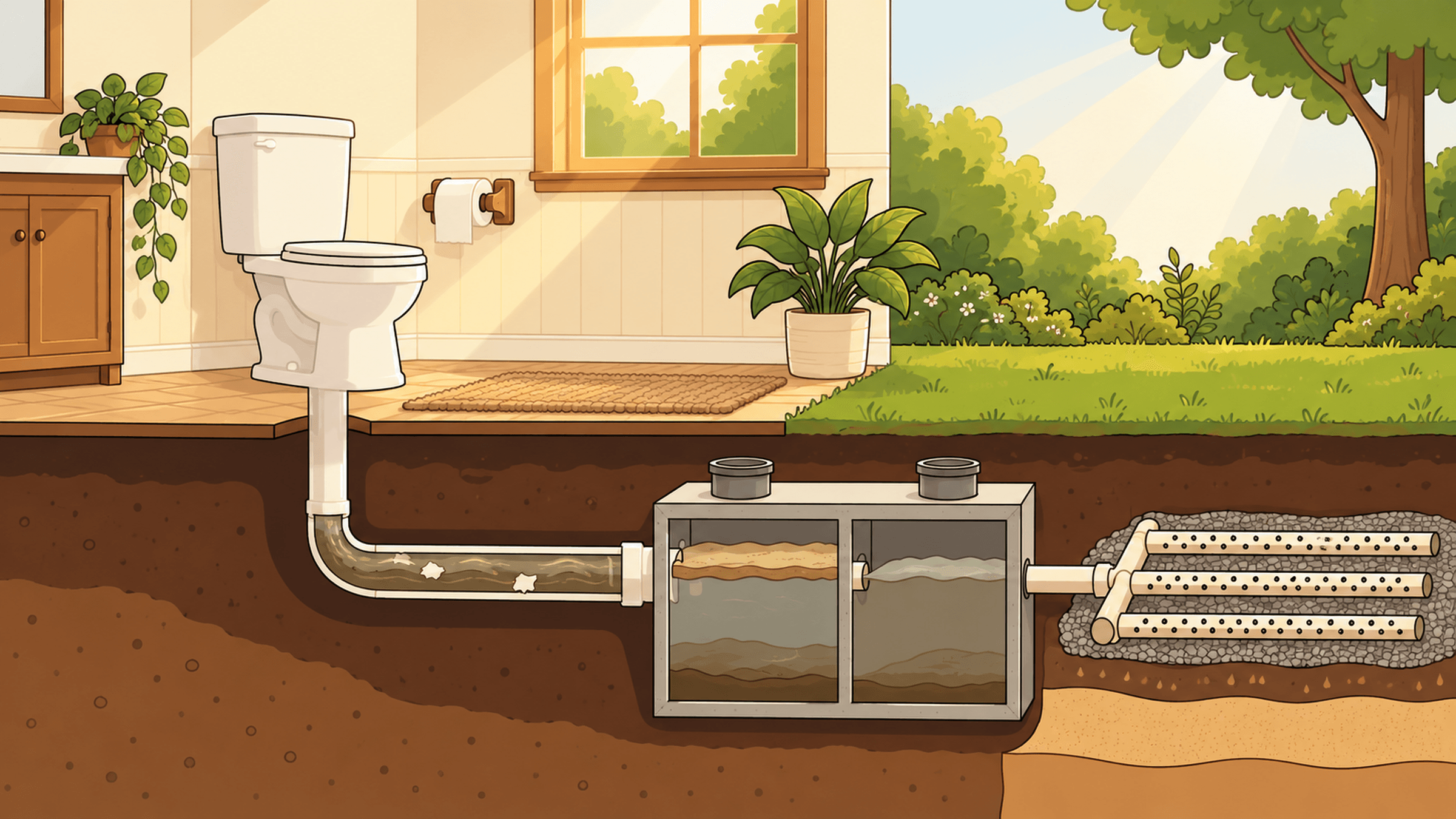
Toilet paper is one of the two things a septic system is designed to receive. People often worry about which roll to buy, but the bigger risk is the other paper products that end up in the toilet.
What the EPA says you can flush
The EPA’s septic FAQ gives a short rule of thumb: don’t flush anything besides human waste and toilet paper. Its list of things that should never go in the toilet includes:
- Non-flushable wipes, such as baby wipes and other wet wipes
- Paper towels
- Feminine hygiene products and diapers
- Dental floss and cigarette butts
- Cat litter, coffee grounds and cooking grease
- Medicines and household chemicals
Kansas State University adds facial tissues to the list of things that don’t decompose in a septic tank.
Toilet paper is on the “yes” side, and the EPA sets no conditions on the type.
Why toilet paper is safe and other paper is not
Toilet paper is made to fall apart once it is wet. The Texas Commission on Environmental Quality points out that toilet paper disintegrates quickly in water, which is the key difference between it and wipes.
Other paper products are made to hold together when wet. The Montgomery County Health Department in Illinois issued a notice in 2020, when many families were using substitutes during a toilet paper shortage. It said toilet paper degrades much faster than other paper products, and that alternative paper products will not break down properly in a private septic system and can lead to expensive repairs. Its advice was simple: put those products in the trash.
Do you need special toilet paper?
No. Public Health – Seattle & King County says toilet paper, regardless of type and brand, should be safe to flush into a septic system.
A few practical points still help:
- “Septic-safe” on the package is fine but not required. It does not replace the basics of pumping and careful flushing.
- Toilet paper still adds solids. It settles in the tank with everything else and leaves when the tank is pumped, which is one more reason to keep a pumping schedule.
- A toilet that keeps clogging usually points elsewhere. Have a plumber check the toilet and the pipes before you blame the paper.
We did not find a government or university source for the popular at-home “jar test,” so we don’t recommend relying on it.
Flushable wipes are the real problem
The word “flushable” on a package means a wipe will go down the toilet. It does not mean it will break down in your tank.
- Seattle and King County public health says that even wipes labeled flushable or septic safe are not truly flushable and usually do not break down.
- The Texas Commission on Environmental Quality says most wipes contain plastic fibers that keep them from breaking apart the way toilet paper does, and that grease in drains catches wipes and makes clogs worse.
In a septic system, wipes that don’t break down stay in the tank as extra solids that only a pump truck can remove, or travel on toward the pipes. Keep a small lidded trash can in every bathroom so nobody has a reason to flush them.
Water matters as much as paper
Toilet paper needs time in the tank to settle and break down along with everything else. Public Health – Seattle & King County notes that sending too much water into a septic system may not leave the bacteria enough time to break down the waste. Its advice for septic homes:
- Spread laundry across several days and run full loads.
- Avoid running the dishwasher and the washing machine at the same time.
- Turn off the tap while brushing teeth or shaving.
Leaks count too. The EPA’s septic care guide says a single leaky or running toilet can waste as much as 200 gallons of water a day, all of it flowing through your tank. If you hear a toilet refilling on its own, fix the flapper or call a plumber.
Signs that something other than toilet paper went down
If any of these show up, the toilet paper is rarely the cause:
- One toilet clogs again and again.
- Drains are slow all over the house, or pipes gurgle.
- Sewage odors near the tank or the drain field.
- Your septic company finds wipes, cloth or plastic in the tank.
Call a licensed septic company if drains are slow throughout the house, and see our guide on signs your septic tank is full. Avoid chemical drain openers, which the EPA advises against.
Never open a septic tank and lean in, and never climb inside. The gases in a septic tank can kill a person very quickly.
Keep the paper side simple
- Flush only human waste and toilet paper.
- Put wipes, paper towels, tissues and hygiene products in the trash.
- Keep bleach and cleaners to label amounts, as explained in our guide on bleach and septic systems.
- Pump on schedule. Our guide on how often to pump your septic tank has the table by household size.
Common questions
Can septic systems handle toilet paper?
Yes. The EPA's rule for a septic system is to flush only human waste and toilet paper. Toilet paper breaks apart quickly in water and ends up in the tank with the other solids, which are removed when the tank is pumped.
Do I need special toilet paper for a septic system?
No. Public Health – Seattle & King County says toilet paper, regardless of type and brand, should be safe to flush into a septic system. A septic-safe label is fine to have, but ordinary toilet paper used in normal amounts is what the system is built for.
Are flushable wipes safe for a septic system?
No. The EPA lists wet wipes among the things you should never flush, and Seattle and King County public health says even wipes labeled flushable or septic safe usually do not break down. Put all wipes in the trash.
What should I do if I already flushed wipes?
A few wipes now and then usually just add to the sludge and get removed at the next pumping. Stop flushing them and mention it to your septic company at the next visit. If drains slow down or gurgle, call a septic professional instead of using a chemical drain opener.
Sources
- U.S. EPA SepticSmart: How to Care for Your Septic System
- U.S. EPA: Frequent Questions on Septic Systems
- Public Health – Seattle & King County: No wipes in the pipes (2020)
- Montgomery County (Illinois) Health Department: toilet paper notice (2020)
- Texas Commission on Environmental Quality: Don't flush that! (2021)
- Kansas State University Research and Extension, MF947: Septic Tank Maintenance (2010)
A simple monthly routine for your tank
BT-DW is one pod a month that adds 75 billion+ Bacillus spores to your tank to help break down organic waste between pumpings. It complements routine pumping; it does not replace it.