
Septic system after heavy rain or flooding: what to do
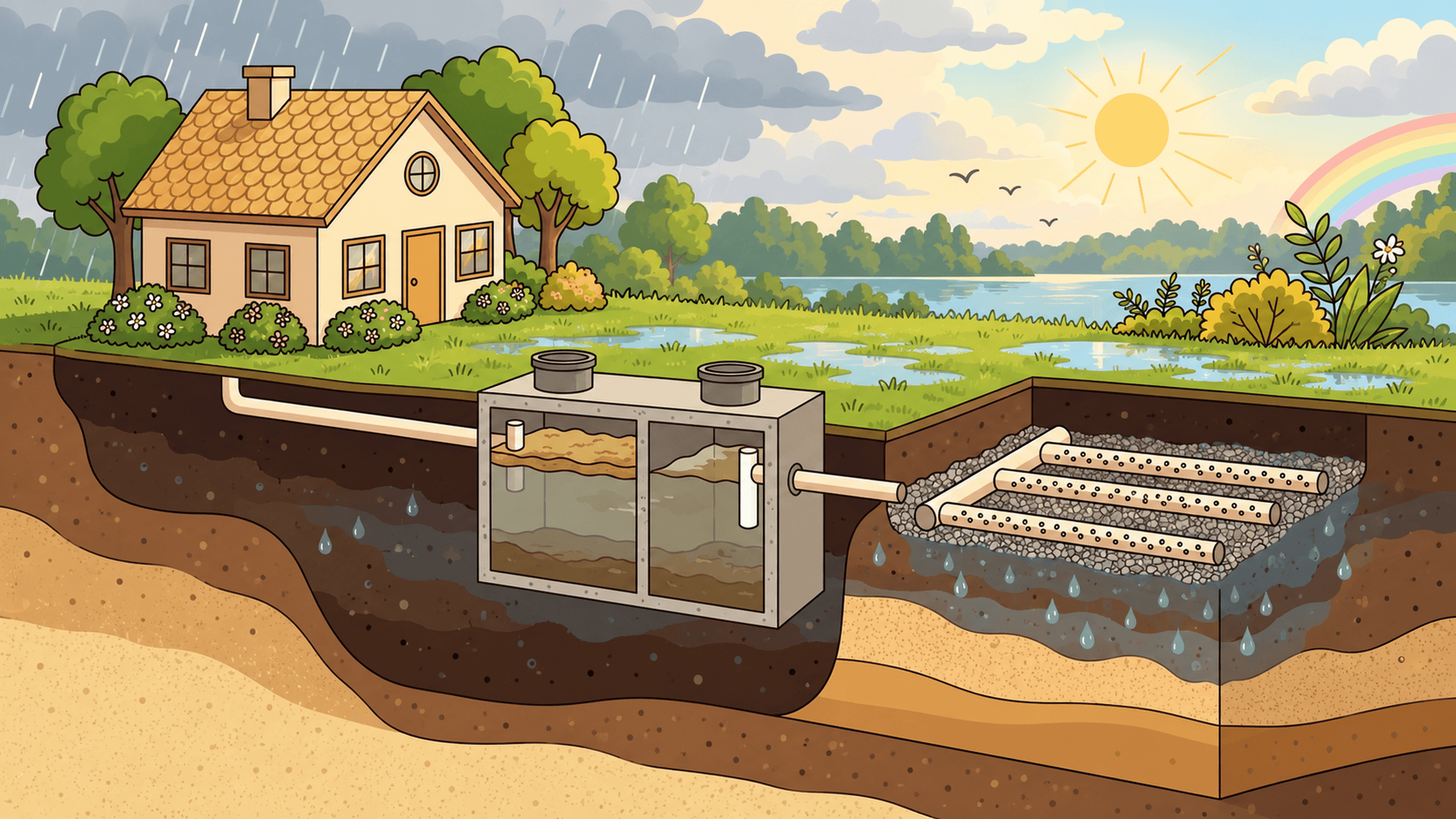
A septic system depends on soil that can soak up water. After days of heavy rain or a flood, that soil is already full, and the system slows down or stops until it dries out.
Why heavy rain affects a septic system
Wastewater leaves the tank and flows into the drain field, where the soil absorbs and treats it. When the ground is saturated, or the water table rises close to the surface, the drain field can’t accept more water. The EPA’s guide on septic systems after a flood explains that when the water table is high or the system is threatened by flooding, sewage can back up into the home, and that wastewater sent into flooded soil is not treated and becomes a source of pollution.
A big rush of water also hurts the tank. The EPA’s septic care guide notes that when a large amount of water enters the tank, it can push solids out into the drain field and clog its pipes. So during wet weather, how much water the house sends matters as much as the rain.
Signs your system is struggling after rain
- Drains slow down all over the house, or the lowest drain backs up.
- Gurgling in the pipes.
- Sewage odors near the tank, the drain field or inside the house.
- Standing water or soggy ground over the drain field that stays after the rest of the yard dries.
Wet ground right after a storm is normal. The EPA’s septic FAQ treats soft, spongy soil over the drain field as a sign of failure mainly when there has been no significant rain. If the symptoms fade as the ground dries, the system was simply overloaded. If they continue, read our guide on drain field basics and call a septic professional.
What to do during heavy rain
- Use as little water as you can. The EPA’s advice for a saturated drain field is to drastically reduce water use in the house. Put off laundry, run the dishwasher only when it’s full and take short showers.
- Plug basement drains if the drain field is saturated, as the EPA suggests, to keep sewage from backing up into the lowest part of the house.
- Keep rainwater off the drain field. The EPA says roof drains, sump pumps and other rainwater drainage should point away from it.
- Stay off it. Don’t drive or run equipment over a wet drain field. Saturated soil compacts easily, and the EPA warns that compaction can lead to system failure.
After a flood: a step-by-step checklist
- Don’t drink well water until it is tested. The EPA says this first, and the Connecticut Department of Public Health advises treating a flooded well as contaminated and using bottled water for drinking and cooking until it has been cleaned and tested. Your local health department can tell you how.
- Don’t use the system until the water drops. The EPA’s rule of thumb: wait until the water in the drain field is lower than the water level around the house.
- Check electrical parts before turning the power back on. Pumps, floats and alarms may have been under water. Stay away from flooded electrical devices until they are dry, clean and checked.
- Don’t pump the tank too soon. Pumping while the soil is saturated can make the tank float out of the ground and break the inlet and outlet pipes. The EPA notes that recently installed systems pop out more easily than older ones.
- Pump once the soil drains. Then have both the tank and any lift station pumped, as the EPA recommends, to remove the silt and debris the flood washed in.
- Get an inspection if you suspect damage. Signs include ground that settled over the tank or a system that won’t accept water. Most buried tanks survive floods, but the EPA says a drain field clogged with silt may need to be replaced.
- Don’t send floodwater down the drains. Let it recede and clean up without pouring it into sinks or toilets, which pushes more water and solids into the drain field.
If sewage backed up into the house, clean the area and wash the floor with a solution of half a cup of chlorine bleach per gallon of water, as the EPA suggests. Never open the tank and lean in, and never climb inside one: septic tank gases can kill a person very quickly. Only trained professionals should clean or repair a septic tank.
Living with a septic system in a flood zone
The EPA advises placing septic tanks away from areas that flood or collect standing water. If you already live in a low spot, a septic professional can look at your site and suggest options. Day to day, the habits that matter most are the ones above: rainwater pointed away from the drain field, no traffic over it, water use spread across the week, and a secure tank lid with undamaged inspection ports. After any flood, repair erosion over the tank and drain field and reseed the grass, which the EPA lists as part of the recovery.
A septic treatment or additive does not fix a saturated or flooded drain field. Water has to drain out of the soil, and silt has to be pumped out of the tank. If you are unsure whether your system came through a storm intact, an inspection is the only way to know. Our guide to the signs of a full septic tank helps you tell an overloaded system from one that needs pumping.
Common questions
Can your septic tank overflow from excess rain?
Rain rarely makes the tank spill over on its own, but the system as a whole can back up. When the ground over the drain field is saturated, wastewater has nowhere to go, and the EPA warns that sewage can then back up into the house. Cutting water use until the soil drains is the main defense. Also make sure the tank lid and inspection ports are secure.
Why does my septic smell after it rains?
A soaked drain field makes the whole system sluggish, and the EPA lists sewage odors near the tank or drain field among the signs of trouble. A blocked roof vent is another common cause, according to the EPA. If the smell fades as the ground dries, keep an eye on it. If it lingers, or comes with slow drains and wet spots in dry weather, call a septic professional.
Should I pump my septic tank after a flood?
Yes, but not while the soil is still saturated. The EPA says pumping a tank in flooded ground is at best a temporary fix and can make the tank float out of the ground and damage its pipes. Once the water has receded and the soil drains, have both the tank and any lift station pumped to remove silt and debris.
Can a septic treatment help after heavy rain?
No. A saturated drain field is a water problem, and no additive changes how fast soil drains. The fixes are less water, time, keeping rainwater away from the drain field and, after a flood, a professional inspection.
Sources
A simple monthly routine for your tank
BT-DW is one pod a month that adds 75 billion+ Bacillus spores to your tank to help break down organic waste between pumpings. It complements routine pumping; it does not replace it.