
How to treat an RV black tank (and what not to put in it)
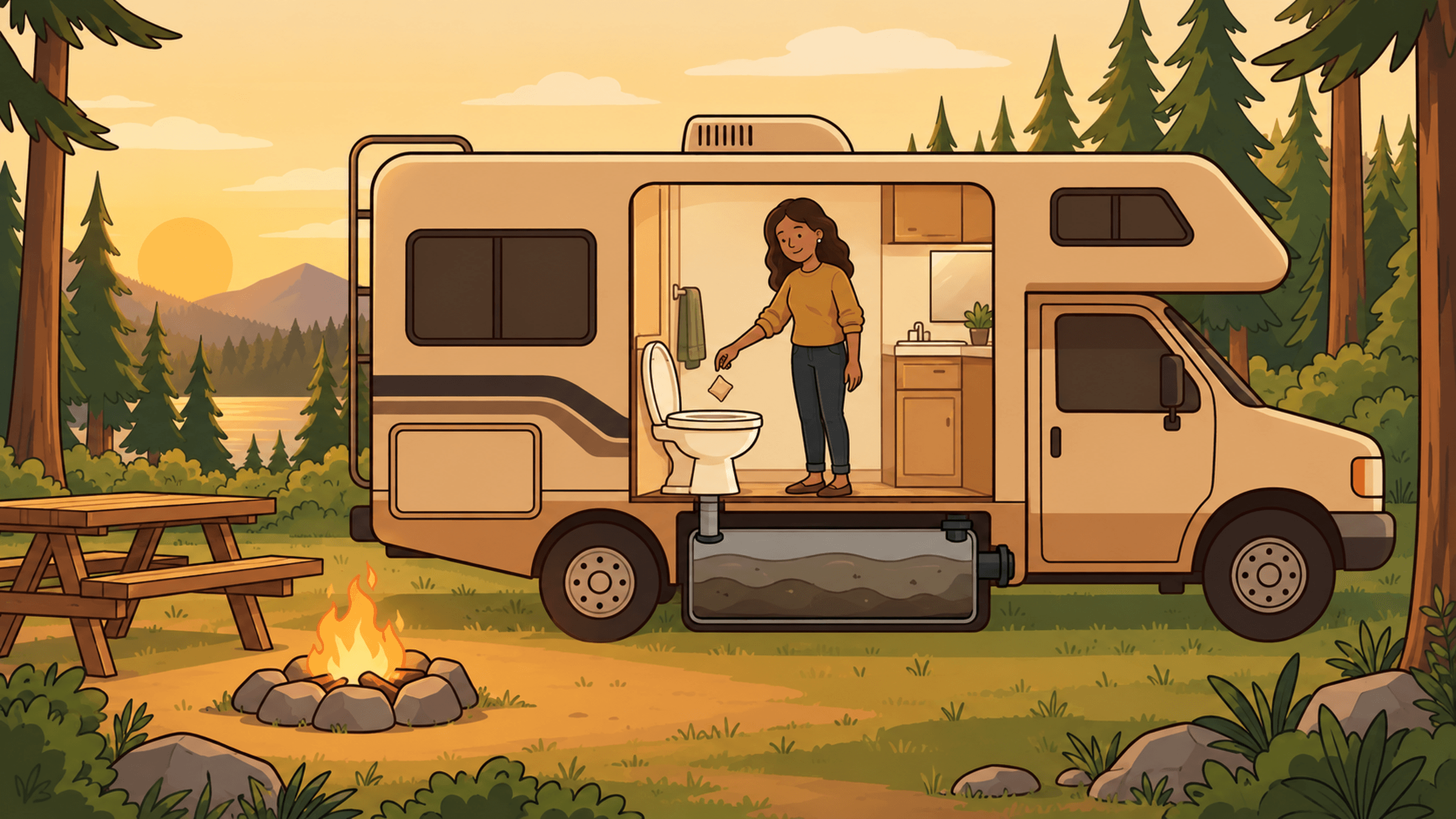
An RV black tank needs less than most people think: water, the right toilet paper, a closed valve and regular dumping. Most problems come from what people add on top of that.
Start with water in the tank
After every dump, put some water back in the black tank through the toilet before you use it again, so waste lands in liquid instead of on a dry tank floor. An RV toilet uses little water: Thetford notes that its toilets use about 1 quart per flush, compared with 1.6 gallons for a home toilet. The tank only gets the water you give it.
A few habits help:
- Add water to the bowl before you flush solids and paper. Dometic’s toilet manual recommends it, and it says to keep about 1 inch of water in the bowl so tank odors stay out of the living space.
- Flush treatments in with plenty of water. Go RVing’s campground setup guide gives the same advice, to keep odors down.
- Don’t overdo it. Flushing far longer than needed fills the tank too quickly, as Dometic points out.
Use RV-safe toilet paper and nothing else
Only human waste, toilet paper and water belong in the black tank. Go RVing recommends toilet paper made for RVs, because regular paper can cause clogs in a small tank. Dometic’s manual lists what to keep out: paper towels, paper cups, diapers and sanitary napkins. Wipes, even ones labeled flushable, belong in the trash.
Keep the black valve closed until it’s time to dump
It is tempting to leave the black valve open at a full-hookup site. Thetford explains what happens: the liquid drains right away and leaves a pyramid of solids in the tank directly below the toilet. Those solids cause odors and can plug the toilet and the tank.
Keep the black valve closed and let the tank fill. The University of Arizona Cooperative Extension advises dumping when the black tank is half full or more, because a smaller load seldom carries the solids out and paper can build up. It also notes that tank gauges are seldom accurate, so a quick look down the toilet with a flashlight can tell you more. The grey valve can stay open while you are hooked to a sewer line.
Our guide on how often to dump your RV black tank covers the dumping steps.
What not to put in your black tank
| Product | Why to skip it | Source |
|---|---|---|
| Bleach | Can quickly damage valves, seals and gaskets | University of Arizona Extension, Dometic |
| Household cleaners with acids | Can dry out and damage toilet seals | Thetford |
| Drain openers and caustic chemicals | Damage seals in toilets and plumbing valves | Dometic |
| Formaldehyde, paraformaldehyde, glutaraldehyde, bronopol | Kill or slow the bacteria that campground septic systems depend on | University of Arizona Extension |
| Wipes, paper towels, diapers, sanitary products | Clog the toilet and the tank | Dometic |
Read the label before you buy a holding tank treatment. The University of Arizona Extension lists formaldehyde, paraformaldehyde, glutaraldehyde, bronopol and Dowicil as ingredients to avoid, and it warns that an eco-friendly word on the label does not by itself mean a product is safe for people or the environment.
Why formaldehyde matters at the dump station
Many RV parks and campgrounds treat their wastewater in a septic system. The University of Arizona Extension explains that most RV treatments either mask odor or kill the bacteria causing it. When that treated waste is dumped into a septic system, it can kill the bacteria the system needs. Solids then pass into the soil treatment area and clog it. Poorly treated sewage can then surface or reach groundwater. Fixing a failed park system costs money, and the extension notes those costs end up in your site fees.
Its advice is simple: dump often and you will need fewer deodorizers, follow the label when you do use one, and avoid the ingredients in the table above. For the septic side of the story, our guide on whether septic treatments work explains what bacteria do in a tank and what the EPA says about additives.
A simple black tank routine
- After dumping, add water to the black tank through the toilet.
- If you use a treatment, flush it in with plenty of water, following the label.
- Use RV toilet paper and add water to the bowl before flushing solids.
- Keep the black valve closed until the tank is at least half full.
- Dump black first, then grey, and rinse the black tank when you can.
- Wear gloves at the dump station and wash your hands afterward.
If the toilet won’t hold water, the valve sticks or the smell won’t go away, have an RV service technician check the seals, valves and vent. Our guide to RV black tank smell walks through the usual causes.
Common questions
Can I use septic tank treatment in my RV?
Only if the label says it is suitable for RV holding tanks. Thetford points out that a holding tank holds waste for several days and is not a mini septic tank, so what matters is how the product behaves in a small tank and at the dump station. Avoid anything with formaldehyde or other bacteria-killing chemicals, and follow the label dose.
Can you put bleach in an RV black tank?
It is better not to. The University of Arizona Extension says never to use bleach to treat a tank because it can quickly damage valves, seals and gaskets, and Dometic's toilet manual warns against chlorine bleach for the same reason. Bleach dumped at a campground can also reduce the bacteria in its septic system.
Can I use Dawn dish soap or vinegar in my RV black tank?
We did not find manufacturer guidance that covers either one. Thetford warns that the acids in most household cleaning products can dry out and damage toilet seals, so check your toilet and valve maker's manual before putting any household product in the tank.
What is wrong with formaldehyde holding tank treatments?
Formaldehyde works by killing or slowing the bacteria that cause odor. The University of Arizona Extension explains that when that treated waste reaches a campground septic system, it can kill the bacteria the system relies on, let solids pass to the drain field and lead to failure. The same fact sheet notes that the EPA classifies formaldehyde as a probable human carcinogen.
Sources
- University of Arizona Cooperative Extension, AZ1233: RV Holding-tank Treatments and Deodorizers in Septic Systems (revised 2018)
- Thetford: Aqua-Magic VI support and FAQ
- Dometic: Model 310 gravity-flush RV toilet, operation manual
- Go RVing: How to Empty the Black Water Tank (2025)
- Go RVing: How to Set Up Your Fifth Wheel at the Campground
A simple monthly routine for your tank
BT-DW is one pod a month that adds 75 billion+ Bacillus spores to your tank to help break down organic waste between pumpings. It complements routine pumping; it does not replace it.