
How often should you pump your septic tank?
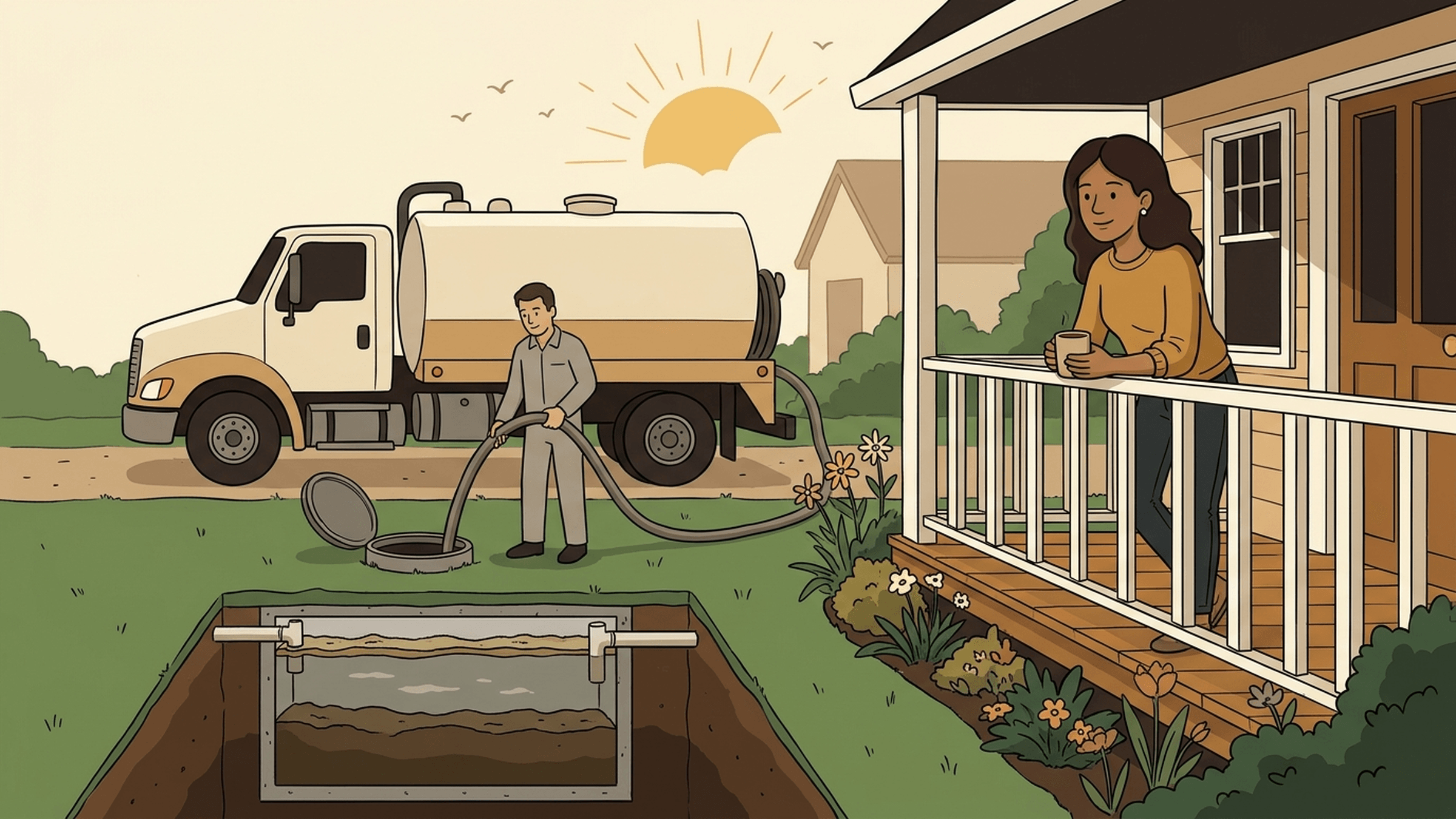
Pumping is the one septic chore you can’t skip. It removes the solids that bacteria can’t break down before those solids reach the drain field, the most expensive part of the system to replace.
Why a septic tank needs pumping at all
Everything that goes down your drains ends up in the tank and separates into three layers:
- Scum on top: grease and oils that float.
- Liquid in the middle, which flows out to the drain field.
- Sludge on the bottom: the solids that settle.
Bacteria in the tank digest part of the solids. Oregon State University Extension estimates that up to half of the solids held in the tank decompose. The rest keeps building up: sand, grit, synthetic fibers from laundry and anything else that doesn’t break down.
As the sludge and scum layers grow, wastewater spends less time in the tank and more solids escape to the drain field. That is how a drain field clogs. Pumping empties the tank and resets the clock.
Pumping frequency by tank size and household
The EPA’s septic care guide says household tanks are typically pumped every 3 to 5 years and inspected at least every 3 years. Your own number depends mostly on two things: how big the tank is and how many people use it.
Oregon State University Extension publishes estimated pumping intervals for year-round homes. Here is part of their table, in years:
| Tank size | 1 person | 2 people | 3 people | 4 people | 5 people | 6 people |
|---|---|---|---|---|---|---|
| 750 gallons | 9.1 | 4.2 | 2.6 | 1.8 | 1.3 | 1.0 |
| 1,000 gallons | 12.4 | 5.9 | 3.7 | 2.6 | 2.0 | 1.5 |
| 1,250 gallons | 15.6 | 7.5 | 4.8 | 3.4 | 2.6 | 2.0 |
| 1,500 gallons | 18.9 | 9.1 | 5.9 | 4.2 | 3.3 | 2.6 |
Source: Oregon State University Extension, EC 1343. Estimates for homes without a garbage disposal.
Two examples from the table:
- A family of four with a 1,000-gallon tank should plan on pumping about every 2.6 years, which is sooner than the “3 to 5 years” many people remember.
- A couple with a 1,500-gallon tank may go 9 years between pumpings, but it still makes sense to have the tank inspected every few years.
What makes you pump sooner
The EPA lists four factors that set your pumping schedule: household size, total wastewater, the volume of solids in it and the size of the tank. In practice, plan on pumping sooner if any of these apply:
- More people than the tank was sized for, including long visits.
- A kitchen garbage disposal, which adds food solids every day.
- Heavy water use in short bursts, like several loads of laundry in one day.
- An older or smaller tank, common in homes built before current codes.
How a pro tells you it’s time
You don’t have to guess. When a licensed septic company inspects your tank, they measure the scum and sludge layers. The EPA’s rule of thumb is that the tank should be pumped if:
- the bottom of the scum layer is within 6 inches of the bottom of the outlet, or
- the top of the sludge layer is within 12 inches of the outlet.
Ask them to write both measurements on the service report and keep it. After two or three visits, those numbers tell you your real interval better than any table.
Leave the lid and the measuring to them. Never climb into a septic tank: the gases inside can kill a person very quickly.
Signs you are already overdue: slow drains in the whole house, gurgling pipes, sewage odors near the tank or the drain field, or standing water and unusually green, spongy grass over the drain field. If you see any of these, call a licensed septic company now rather than waiting for your next scheduled pumping.
Keep a simple pumping calendar
- Look up your tank size on the permit or the last service report.
- Find your interval in the table above, and shorten it if you use a garbage disposal.
- Write down the date of the last pumping and the measured layers.
- Set a reminder for the next inspection.
If you don’t know when the tank was last pumped, start with an inspection. It is the only way to know where you stand.
Common questions
I have never pumped my septic tank. Is that a problem?
Not always, but it is worth checking. The EPA notes that a tank that has gone years without pumping can be fine if the home uses very little water, though that is rare. It can also mean the tank is leaking, while solids keep building up and can end up clogging the drain field. Have a licensed septic company inspect it and measure the sludge and scum layers.
Does a garbage disposal mean I need to pump more often?
Yes. Food scraps add solids to the tank, so the EPA advises limiting the disposal and pumping more often if you use one. Oregon State University's table assumes no disposal.
Can I pump my septic tank myself?
It is a job for a licensed septic company with a pump truck. They also inspect the tank, the baffles and the layers while they are there. Never climb into a septic tank: the gases inside can kill a person very quickly.
How do I find out how big my septic tank is?
Check the septic permit or the as-built drawing from your county health department, the papers from when you bought the house, or ask the company that last pumped it. They write the tank size on the service report.
Sources
A simple monthly routine for your tank
BT-DW is one pod a month that adds 75 billion+ Bacillus spores to your tank to help break down organic waste between pumpings. It complements routine pumping; it does not replace it.