
How often to dump your RV black tank (and how much water to add)
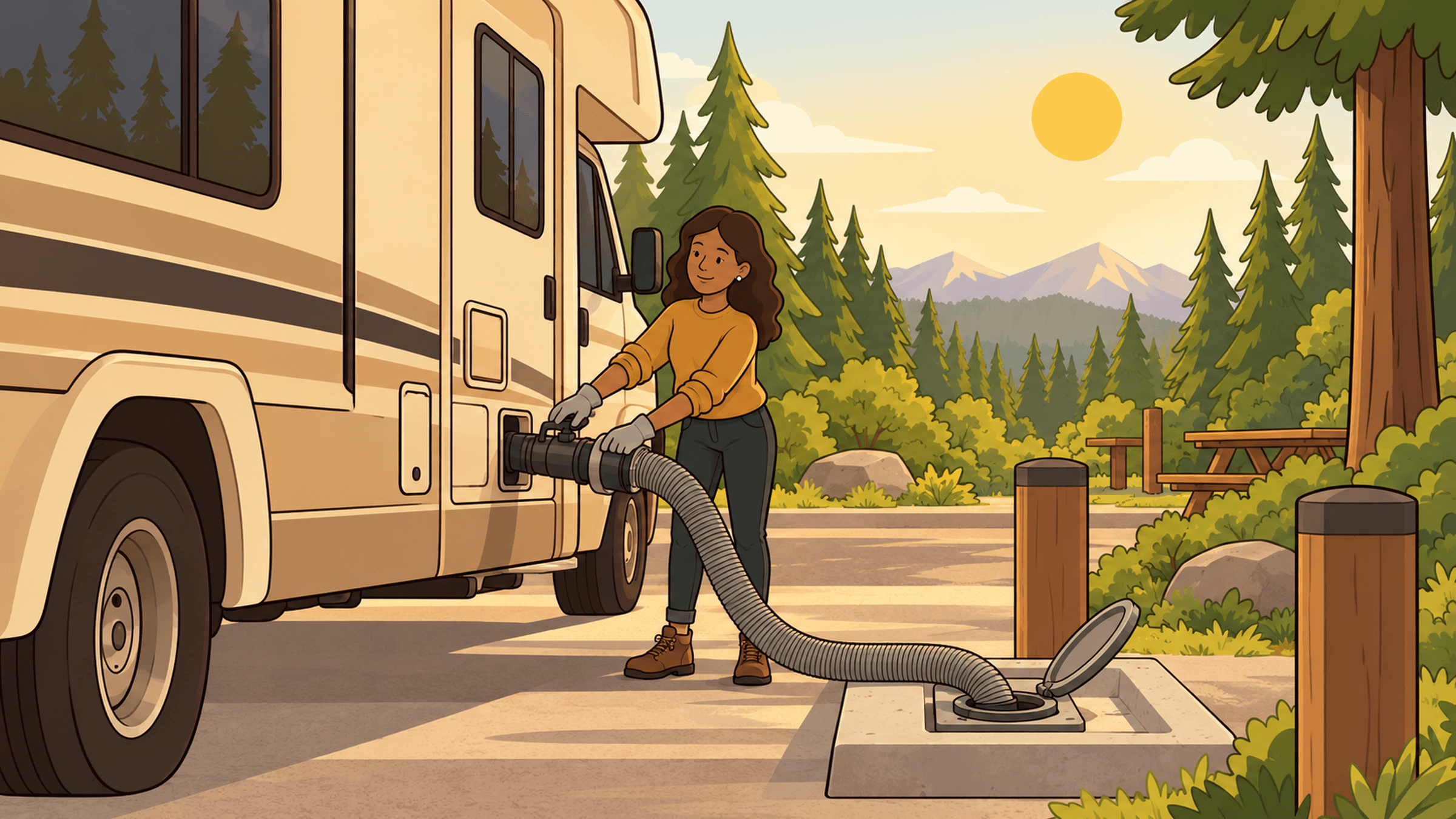
How often you dump depends on how fast your black tank fills, not on the calendar. The goal is to dump with enough in the tank to carry the solids out, and often enough that waste doesn’t sit and smell.
Dump when the tank is half full or more
The University of Arizona Cooperative Extension advises keeping the black valve closed and dumping when the tank is half full or more. Dumping a smaller load seldom flushes the solids out properly, and paper and waste can build up in the tank. The same fact sheet also recommends dumping often so you need fewer deodorizers.
So the right interval depends on your tank size and how many people are traveling. Watch the tank, not the clock.
Two things make it easier to judge:
- Don’t trust the gauge alone. The extension notes that holding tank gauges are seldom accurate, and suggests looking down through the toilet with a flashlight.
- Keep the black valve closed between dumps, even at a full-hookup site. Thetford warns that an open valve lets the liquid drain and leaves a pyramid of solids under the toilet. The grey valve can stay open while you are connected to a sewer line.
Add water back after every dump
An RV toilet uses very little water. Thetford notes that its toilets use about 1 quart per flush, compared with 1.6 gallons for a home toilet. After you dump and rinse, flush some water back into the black tank so the next waste lands in liquid. Also add water to the bowl before flushing solids.
We could not find a verified number of gallons that fits every tank. If your RV or toilet manual gives one, use it.
How to dump your RV black tank, step by step
These steps follow Go RVing’s guides, including its Sewer 101 guide to hooking up and dumping:
- Put on gloves. Reusable heavy-duty sanitation gloves or disposable nitrile gloves both work.
- Park close to the inlet. Remove the RV sewer cap, connect the sewer hose to the RV outlet until it locks, and run the other end into the inlet with a downward slope.
- Check every connection before you open a valve. Some campgrounds require a donut seal or threaded fitting for a tight connection.
- Open the black valve first. Let it drain until the flow slows to a trickle, then close it.
- Rinse the black tank if your RV has a flush inlet. Use a separate hose that is never used for drinking water, and run it until the water comes out clear.
- Open the grey valve. The soapy grey water rinses the sewer hose on its way out. Close it when the tank is empty.
- Rinse and store the hose. Disconnect the RV end first and lift the hose to drain it into the inlet, then cap it and store it away from your drinking water hose.
- Wash up. Take off the gloves and wash your hands with soap and water.
Keep the drinking water hose and the sewer gear completely separate. Go RVing’s black tank guide says never to use your fresh water hose to flush the black tank.
Dump station etiquette
At a shared dump station, other RVers are usually waiting. A few habits keep things moving and clean:
- Have your gloves, hose and fittings ready before you pull in.
- Save long tank-cleaning sessions for a full-hookup site, so you don’t tie up a shared station.
- Rinse any spills on the pad with the non-drinking rinse hose provided.
- Never use the rinse hose for your fresh water tank.
- Follow the posted rules, and never dump on the ground. The University of Arizona Extension is clear on that point.
The grey tank
The grey tank holds water from the sinks and shower, and it follows different rules. The University of Arizona Extension says you can leave the grey valve open whenever you are connected to a park sewer line. When you dump at a station, empty it after the black tank so its water rinses the hose. If the grey tank drains slowly, Go RVing notes that grease buildup may be the cause.
Before you store the RV
Go RVing’s winter storage guide says to thoroughly drain the fresh, grey and black tanks and to open the low-point drains. If you have a black tank flush, use it to clean the tank and reduce odors in storage. If not, spray clean water into the tank while it drains.
When dumping doesn’t go as planned
If the tank drains slowly, won’t empty or the valve sticks, don’t force it. An RV service technician can check the valve, the tank and the vent. If smells linger after a normal dump, our guide on RV black tank smell covers the usual causes. For what to add to the tank, and what to keep out of it, see how to treat an RV black tank.
Common questions
How long can you leave waste in an RV black tank?
We did not find a verified maximum number of days. Thetford describes a holding tank as something that holds waste for several days, not a mini septic tank. Waste that sits longer smells more, so dump when the tank reaches half full or more, and always drain and rinse it before storing the RV.
How much water should I put in my RV black tank?
There is no single number that fits every tank. Put some water back through the toilet after each dump so waste does not land on a dry floor, add water to the bowl before flushing solids, and flush any treatment in with plenty of water. Your RV or toilet manual may give a starting amount for your tank.
Should I leave water in my RV black tank?
Between dumps on a trip, yes: a little water after dumping helps. Before storage, no. Go RVing's winter storage guide says to drain the fresh, grey and black tanks thoroughly and to rinse the black tank as it drains.
Where can I dump my RV black tank?
At a campground or RV park sewer hookup, or at a dump station. Check the campground's rules first: Go RVing notes that some don't allow a sewer hose to stay connected all the time. Never dump holding tank contents on the ground or into a storm drain.
Sources
- University of Arizona Cooperative Extension, AZ1233: RV Holding-tank Treatments and Deodorizers in Septic Systems (revised 2018)
- Go RVing: How to Empty the Black Water Tank (2025)
- Go RVing: Sewer 101, How to Safely Hook Up and Dump Your RV Tanks (2025)
- Go RVing: Complete Guide to Storing Your RV for the Winter
- Thetford: Aqua-Magic VI support and FAQ
A simple monthly routine for your tank
BT-DW is one pod a month that adds 75 billion+ Bacillus spores to your tank to help break down organic waste between pumpings. It complements routine pumping; it does not replace it.