
Can you have a garbage disposal with a septic system?
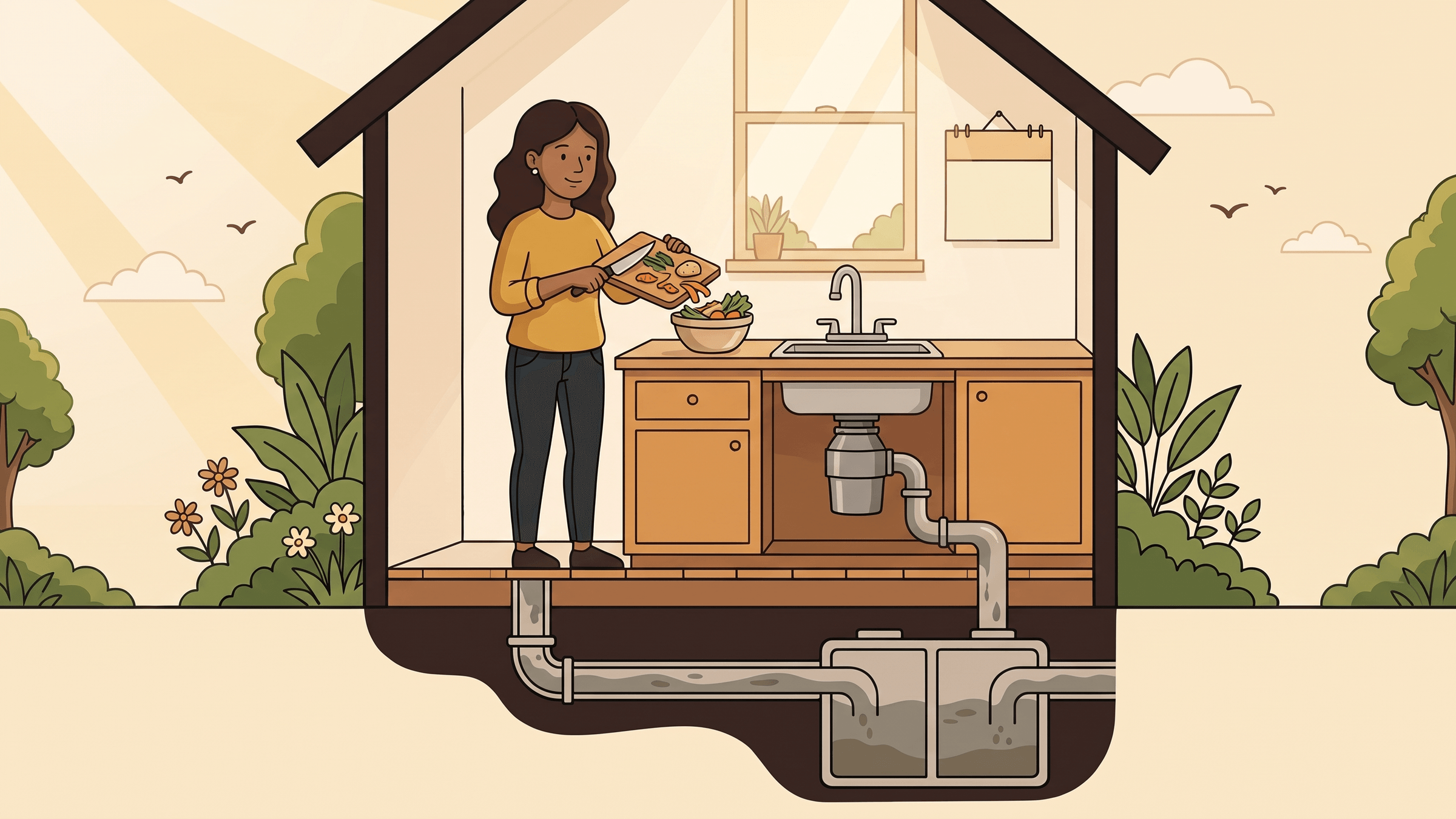
A garbage disposal turns food scraps into small pieces and washes them down the drain. On a city sewer, they go to a treatment plant. On a septic system, every one of them goes into your tank and stays there until it is broken down or pumped out.
What a disposal does to a septic tank
A septic tank separates wastewater into a floating scum layer, a liquid middle and a sludge layer of settled solids on the bottom. Bacteria break down part of the solids, and the rest stays until the tank is pumped.
Food from a disposal adds to that pile. The EPA says food waste can add an unnecessary amount of solid material to the tank. The New Jersey Department of Environmental Protection goes further: its septic primer says a garbage disposal can increase the solids going into the tank by as much as 50%.
Oregon State University Extension puts it plainly: disposals are not recommended for septic systems, because they add a solids load to the system. That doesn’t mean you can’t have one. It means you have to plan for it.
How much more often you’ll need to pump
The EPA’s septic care guide recommends pumping household tanks every 3 to 5 years, with an inspection at least every 3 years. With a disposal, plan on the shorter end or sooner. Two simple ways to adjust:
| Rule of thumb | Source | Example |
|---|---|---|
| Cut the time between pumpings by about one-third | Kansas State University, MF947 | A tank you would pump every 3 years becomes about every 2 years |
| Count the disposal as one more person | New Jersey DEP septic primer | A family of 3 with a disposal pumps as often as a family of 4 |
Our guide on how often to pump your septic tank has the table by tank size and household. Those numbers assume no garbage disposal, so adjust them with one of the rules above. After each pumping, ask your septic company to write down the sludge and scum measurements. A few visits later, you’ll know your real interval.
Why the extra solids matter for the drain field
The tank’s job is to hold solids back so that only the clarified liquid flows on to the drain field. The New Jersey primer explains that removing solids before the liquid leaves the tank is what protects the soil absorption area from clogging and failure. When food solids fill the tank faster, there is less room for settling, and more solids can escape to the drain field, which is the most expensive part of the system to replace.
That is why some states plan for disposals from the start. In New Jersey, a new system installed with a garbage disposal needs a two-compartment tank sized 50% larger and a disposal field 25% larger. Many older systems were built before rules like these, so the primer advises choosing a pumping frequency that accounts for the added load.
What never goes down the disposal on a septic system
Some kitchen waste doesn’t break down in a septic tank at all. Kansas State University lists fats, oils, grease, eggshells, coffee grounds and bones among the things to keep out of the drain. The EPA also says to keep cooking grease and coffee grounds out of the system.
- Grease, oil and fat: let them cool, then put them in the trash.
- Coffee grounds and eggshells: trash or compost.
- Bones: trash.
Habits that make a disposal easier on your tank
You don’t have to remove the disposal. These habits cut down on what reaches the tank:
- Scrape plates into the trash or a compost bowl first. The disposal then only handles small leftovers.
- Use it less. The EPA’s advice is to eliminate or limit its use.
- Keep grease out. Wipe greasy pans with a paper towel and throw the towel away.
- Spread out water use. The EPA recommends spreading washing machine use through the week instead of doing every load in one day.
- Skip chemical drain cleaners. The EPA suggests boiling water or a drain snake instead.
When to call a professional
Call a licensed septic company if you notice slow drains throughout the house, gurgling pipes, sewage odors near the tank or drain field, or soggy ground over the drain field. These can mean the tank is overdue for pumping, which happens sooner in homes with a disposal. See our guide on signs your septic tank is full.
Never open a septic tank and lean in, and never climb inside one. Oregon State University Extension warns that the gases in a septic tank can kill a person very quickly.
Pumping more often costs more over the years, which is worth knowing before you install a disposal. Our guide on septic tank pumping cost helps you plan for it.
Common questions
Does a garbage disposal mean I need to pump my septic tank more often?
Yes. The EPA says a tank will need pumping more frequently if you use a disposal. Kansas State University suggests shortening the interval by about one-third, and New Jersey's septic primer suggests counting the disposal as one extra person in the house.
Is there such a thing as a septic-safe garbage disposal?
Whatever the label on the box says, the ground-up food still ends up in your tank as solids. The EPA's advice applies to any model: limit its use and pump more often. Ask your septic company about your own tank before you install one.
Can I put coffee grounds down the disposal with a septic system?
No. The EPA lists coffee grounds among the things that should not go into a septic system, and Kansas State University says coffee grounds, eggshells and bones don't decompose in the tank. They go in the trash or the compost.
Can I add a garbage disposal to a house with an existing septic system?
Check first. Some states require a larger tank for homes with a disposal: New Jersey, for example, requires new systems installed with one to have a two-compartment tank 50% larger. Ask your county health department and a licensed septic company whether your tank is big enough.
Sources
- U.S. EPA SepticSmart: How to Care for Your Septic System
- U.S. EPA: Frequent Questions on Septic Systems
- Oregon State University Extension, EC 1343: Septic tank maintenance (revised 2022)
- Kansas State University Research and Extension, MF947: Septic Tank Maintenance (2010)
- New Jersey Department of Environmental Protection: Septic Systems 101 primer
A simple monthly routine for your tank
BT-DW is one pod a month that adds 75 billion+ Bacillus spores to your tank to help break down organic waste between pumpings. It complements routine pumping; it does not replace it.