
Do septic tank treatments work? An honest answer
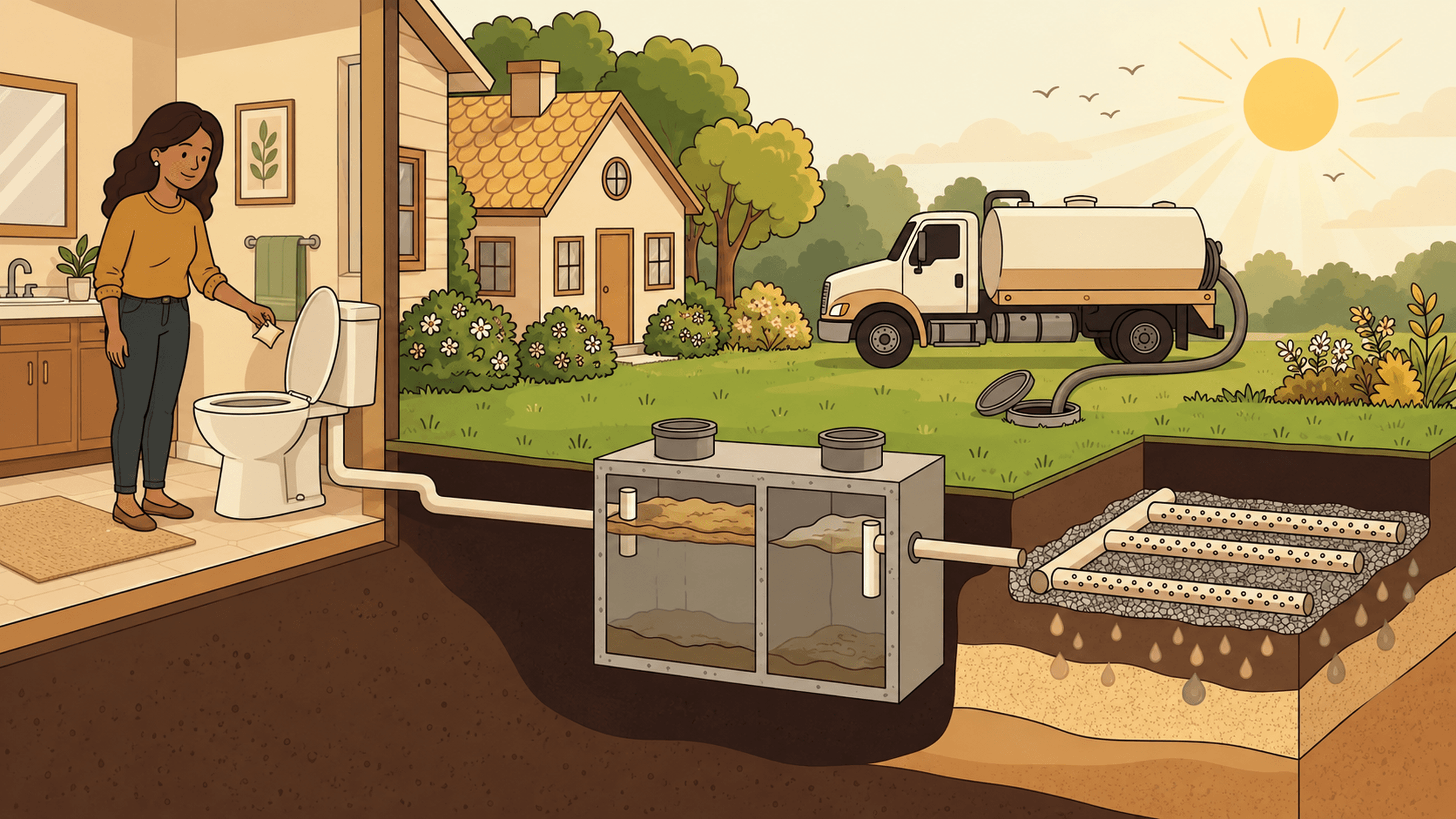
Septic treatments fill the shelves at every hardware store, and plenty of homeowners use one without ever asking whether they need it. Here is what the experts say, including the parts that don’t help companies like ours sell pods.
What the EPA and universities say
The EPA answers the question directly in its frequent questions on septic systems. Asked whether additives are recommended for septic systems, it says no: septic systems already contain the bacteria and other microorganisms they need, and some products are ineffective or can even harm the system. The EPA also does not recommend or approve individual septic products.
Its strongest warning is about chemical additives. The EPA advises against additives made with organic solvents or strong alkali chemicals, because they can harm the soil structure in the drain field and threaten groundwater. Biological products, like bacteria, are not part of that warning, but they are part of the “no”: the EPA says a healthy system needs neither kind.
University extension services agree:
- Oregon State University Extension writes that biological and chemical additives are not needed to aid or accelerate settling or decomposition in a septic tank.
- The University of Arizona Cooperative Extension says that a household normally adds more than enough of the right kind of bacteria to its septic system, so there is no need for additives.
- Kansas State University Research and Extension cites a study in which a biological additive caused excessive decomposition and extra gas in the sludge layer, which can stir solids up and carry them to the drain field.
There is little independent testing of these products in either direction. Manufacturers point to their own data, and experts point out that independent studies are few. What nobody disputes is the rest of this guide.
What no treatment can do
Whatever you add to your tank, some things stay the same:
- It can’t replace pumping. Sand, grit and synthetic fibers from laundry don’t break down. Only a pump truck removes them. See how often to pump your septic tank.
- It can’t fix a failing drain field. Wet spots, soggy soil or sewage backing up need a septic professional.
- It can’t make up for flushing the wrong things. Wipes, grease, paper towels and cat litter still cause trouble.
What actually keeps a septic system healthy
The EPA’s list is short:
- Inspect the system at least every 3 years.
- Pump the tank every 3 to 5 years, or as often as your tank size and household need.
- Spread out water use, such as laundry loads across the week.
- Flush only human waste and toilet paper.
- Keep harsh chemicals out: no solvents, paint or large amounts of cleaners down the drain, and no chemical drain openers.
- Limit the garbage disposal, which adds solids and means more frequent pumping.
If you do all of that, your system has what it needs.
Leave the tank itself to a licensed septic company. Never open a septic tank and lean in, and never climb inside one: the gases inside can kill a person very quickly.
If you choose to use a treatment anyway
Some people still like a monthly routine, for example in homes with heavy cleaner use, a garbage disposal or a cabin that sits empty for months. If that’s you, choose carefully:
- Biological, not chemical. Skip products with caustic lye, acids or solvents.
- A stated dose and count. The label should tell you how much to use, how often, and how much bacteria each dose holds, based on the manufacturer’s own Certificate of Analysis.
- Honest claims. Walk away from “never pump again”, “EPA approved” or “fixes any septic problem”. None of those are true for any product.
- Keep pumping. A treatment is something you add to a maintenance schedule, never a replacement for it.
Common questions
Are septic tank additives approved by the EPA?
No. The EPA does not approve or recommend individual septic products, and it says additives are not necessary for a septic system to treat household wastewater. Be wary of any product that says otherwise.
Can a septic treatment replace pumping?
No. Sand, grit and synthetic fibers do not break down in a septic tank, whatever you add. Only pumping removes them. Most household tanks are pumped every 3 to 5 years.
Can septic additives harm my system?
Some can. The EPA warns against additives made with organic solvents or strong alkali chemicals, which can damage the soil in the drain field and threaten groundwater, and it advises against chemical drain openers. University extension services also note that independent testing of additives is limited.
My system already has problems. Will a treatment fix it?
No. Slow drains, backups, odors or wet ground over the drain field need a septic professional to find the cause. A treatment is not a repair.
Sources
- U.S. EPA: Frequent Questions on Septic Systems (additives)
- Oregon State University Extension, EC 1343: Septic tank maintenance
- Oregon State University Small Farms: Septic system additives, more harm than help
- University of Arizona Cooperative Extension, AZ1258: Septic system additives
- Kansas State University Research and Extension, MF2877
A simple monthly routine for your tank
BT-DW is one pod a month that adds 75 billion+ Bacillus spores to your tank to help break down organic waste between pumpings. It complements routine pumping; it does not replace it.