
Septic care for cabins and vacation homes
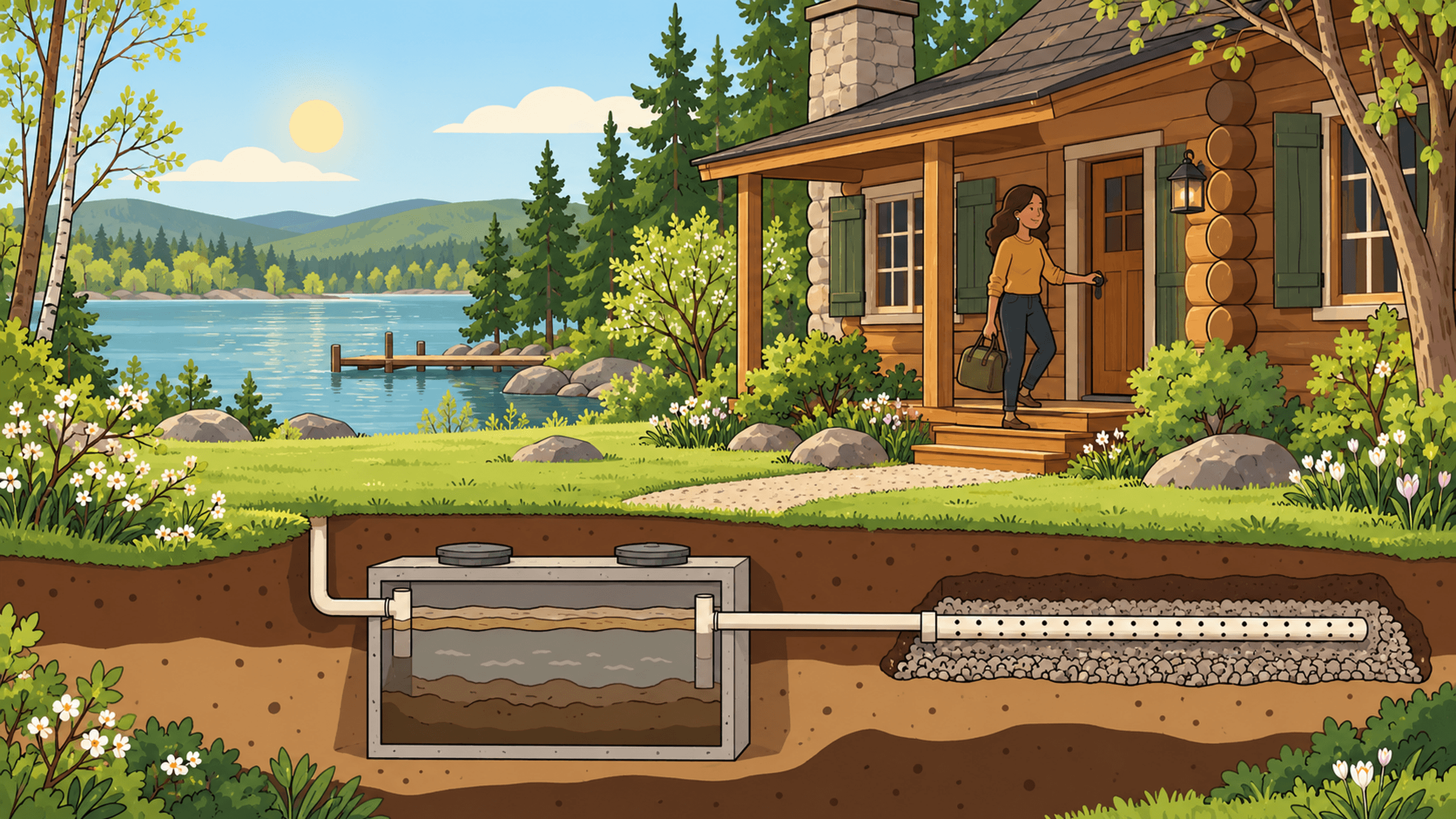
A cabin’s septic system lives an odd life: empty for weeks or months, then full of family and friends for a long weekend. It handles that well if you plan for both extremes.
Is it bad for a septic system to sit unused?
On its own, no. The bacteria that break down waste in a septic tank come in with the wastewater. The EPA’s septic FAQ explains that there is already a significant presence of bacteria and other microorganisms in household systems, which is why it does not recommend additives. When you come back and start using water, the tank picks up where it left off.
The empty months do bring three practical risks:
- Freezing in cold states. The University of Minnesota lists irregular use as a common cause of frozen systems: when a cabin sits empty, no warm wastewater enters to keep pipes and tank above freezing. NDSU Extension notes that even a week or more of vacancy lets the tank cool.
- Dry drain traps. The water in each trap evaporates over time, and sewer gas comes up through the drain. Run water in every drain when you arrive and the smell goes away.
- Problems nobody sees. A leak, a wet spot over the drain field or a broken lid can go unnoticed for months.
Closing the cabin for the season
- Fix any dripping faucet or running toilet. A slow trickle into a cold pipe is a classic way to freeze it, according to the University of Minnesota.
- Protect the system from cold. For seasonal homes, NDSU suggests at least 1 foot of insulation over the tank, extending at least 5 feet past its edges, and the University of Nebraska-Lincoln (UNL) mentions a professionally installed tank heater as an option. A layer of 8 to 12 inches of mulch over the tank, pipes and drain field also helps.
- Make sure every riser and lid is capped. Open risers let cold air in.
- Decide about pumping. For cabins that sit empty in winter, the University of Minnesota says pumping before you leave can help, since an empty tank refills with warm wastewater when you return. Skip it if your area has a high water table and the tank was not designed for it.
- Keep vehicles off the system, including snowmobiles and ATVs, and don’t plow the snow off it.
Our winter septic guide has the full list of freezing causes and what to do if it happens.
Opening up in spring
- Run water in every sink, tub, shower and floor drain to refill the traps.
- Walk over the tank and drain field. Standing water, soft or spongy soil, sewage odors or bright green grass in dry weather are signs of trouble, according to the EPA.
- Listen for gurgling drains in the first days of use.
- If anything looks off, call a septic professional before the first big weekend. The EPA notes that spring is a great time to service a septic system.
Heavy weekends with guests
Most cabin trouble starts on the busiest weekend of the year. A system sized for a small household suddenly serves ten people. The EPA’s septic care guide warns that when a large amount of water enters the tank at once, it can push solids out into the drain field and clog it.
| Habit | Why it helps |
|---|---|
| Spread laundry over several days, full loads only | The EPA says doing all the laundry in one day can harm the system |
| Stagger showers and the dishwasher | Avoids sending a big rush of water at once |
| Fix running toilets right away | The EPA says one running toilet can add up to 200 gallons a day |
| Flush only human waste and toilet paper | The EPA lists wipes, paper towels and grease among things never to flush |
| Keep cars parked off the drain field | The EPA says not to drive or park on it |
If a crowd is coming, a short note by the toilet and the washing machine does more than any product. Our guide to septic-safe toilet paper covers what’s safe to flush.
Inspections and pumping for a seasonal home
The EPA’s general advice applies to cabins too: have the system inspected at least every 3 years, and pump when the tank needs it, typically every 3 to 5 years for a household tank. A cabin used only in summer may go longer between pumpings, because less waste goes in, but don’t guess. Ask the septic company to measure the sludge and scum layers and write them on the report. Our guide on how often to pump a septic tank explains the measurements.
If you rent the cabin out, the number of people and the water they use set the pace more than the calendar does. Ask your septic company how often to check it, and keep the service records.
Never open the tank and lean in, and never climb inside one. The gases in a septic tank can kill a person very quickly. Leave lids, pumps and alarms to a licensed professional.
Common questions
Is it bad for a septic system to sit unused?
Not by itself. The EPA notes that household wastewater already carries plenty of bacteria and other microorganisms, so the tank gets them back once people use the house again. The problems come from the empty house: drain traps dry out and let sewer gas in, and in cold climates an idle system is more likely to freeze.
Do I need to pump my cabin's septic tank before winter?
Not always. The University of Minnesota suggests pumping before a long winter absence as one option for systems at risk of freezing, or if you use the cabin only now and then in winter. If you have a high water table, pump only if the tank was designed for it. Ask your septic company what fits your site.
Does a cabin used only in summer need pumping as often as a house?
Usually less often, because less waste goes in. There is no single table for seasonal use, so the best guide is a measurement: have a septic professional check the sludge and scum layers at each inspection and pump when they say the tank is close to full. Keep inspecting at least every 3 years.
What should I tell guests or renters about the septic system?
Two things matter most: flush only human waste and toilet paper, and don't run several loads of laundry or long showers back to back. A short note by the toilet and the washer helps. If you rent the cabin, more people means more wastewater, so ask your septic company whether to check it more often.
Sources
- U.S. EPA: Frequent Questions on Septic Systems
- U.S. EPA SepticSmart: How to Care for Your Septic System
- University of Minnesota Onsite Sewage Treatment Program: Freezing Problems & Septic Systems (fact sheet, hosted by the City of Crosslake, MN)
- NDSU Extension: Precautions Can Prevent Frozen Septic Systems (2014)
- University of Nebraska-Lincoln Water: Water and wastewater in winter weather
A simple monthly routine for your tank
BT-DW is one pod a month that adds 75 billion+ Bacillus spores to your tank to help break down organic waste between pumpings. It complements routine pumping; it does not replace it.