
Can you use bleach with a septic system?
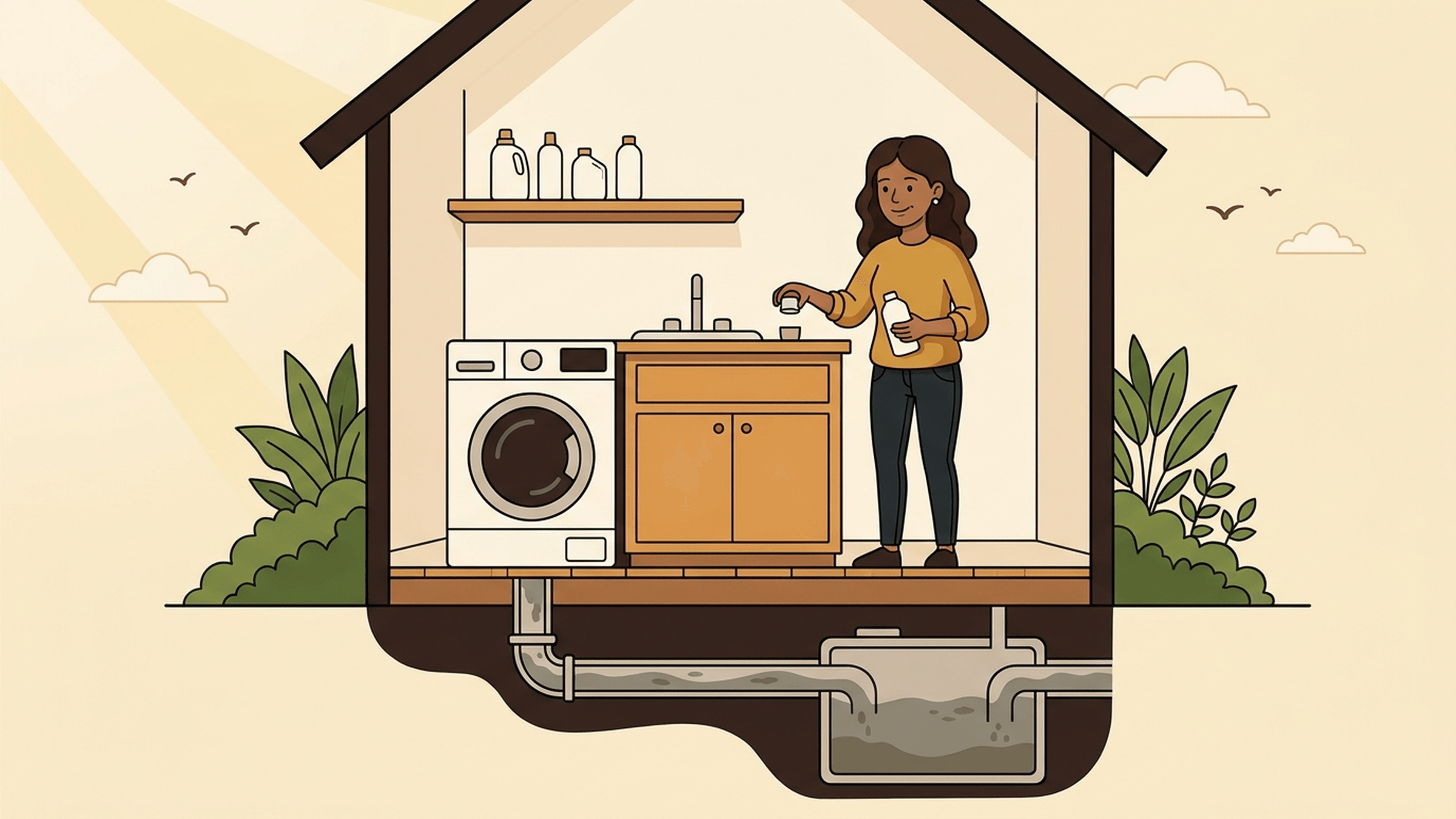
A septic tank works because bacteria in it break down the solids in your wastewater. Bleach and antibacterial cleaners are made to destroy bacteria, so it is fair to ask what happens when they go down the drain. The short version: normal use is fine, heavy use is not.
What happens when bleach reaches the tank
The University of Arizona Cooperative Extension looked at this question in its fact sheet on antibacterial products in septic systems. Here is what it found, in plain terms:
- Antibacterial, sanitizing and disinfectant products do destroy some of the helpful bacteria in a septic system, even when used according to the label.
- The normal bacteria population is large enough to recover quickly. With conservative use, the fact sheet says, serious problems should not occur.
- A single product or a single use normally does not cause major problems.
- Excessive use can cause significant, even total, loss of the bacteria in the system.
So the question to ask is how much and how often, not whether you use bleach at all. The fact sheet is also honest about the limits: more research is needed to pin down what counts as excessive and which products are more or less harmful. That is why we give habits below rather than a number of cups.
Where these products hide in a normal home
Laundry bleach is the obvious one. The University of Arizona lists many more products found in nearly every home that can affect a septic system:
| Product | Why it matters | A gentler habit |
|---|---|---|
| Laundry bleach and detergents with bleach | Frequent use counts as excessive | Use bleach only for loads that need it, at the label dose |
| Toilet bowl cleaners that dose every flush | A steady supply of cleaner into the tank | Clean the bowl by hand when it needs it |
| Antibacterial hand soap | Used many times a day | Plain soap for everyday handwashing |
| Sink, counter, tub, tile and shower cleaners | Rinsed down the drain after every cleaning | Small amounts of mild cleaners, more scrubbing |
| Chemical drain cleaners | Strong chemicals in one dose | Boiling water or a drain snake (EPA) |
| Antibiotic medicines | Also listed as affecting tank bacteria | Take them as prescribed, and never flush unused medicines |
The fact sheet also suggests keeping chlorinated water from pools and hot tubs out of the septic system.
How to use bleach and cleaners safely with a septic system
You don’t need to give up cleaning. A few habits keep the tank in good shape:
- Follow the label. Measure bleach instead of pouring by eye. More is not cleaner.
- Use the least that does the job. The University of Arizona recommends the minimum amount of soap, detergent and bleach needed.
- Spread out the laundry. The EPA advises spreading washing machine use through the week rather than doing every load in one day.
- Skip the automatic toilet cleaners. A product that releases cleaner with every flush sends some to the tank all day long.
- Scrub more, pour less. Mild cleaners and a brush do most jobs.
- Never pour leftovers down the drain. The EPA says solvents, paints and large amounts of toxic cleaners should not go into the system. The University of Arizona advises taking solvents, paints and other toxic chemicals to local hazardous waste collection instead.
Kansas State University adds that excessive disinfectants, solvents and degreasers do not break down properly in a septic system and can contaminate groundwater.
Signs your tank’s bacteria are struggling
Heavy cleaner use doesn’t show up right away. Over time, solids that should break down build up faster. You may notice:
- Sewage odors near the tank or over the drain field.
- Drains that slow down all over the house, or gurgling pipes.
- A septic company reporting a thick scum or sludge layer sooner than expected.
The University of Arizona notes that some septic professionals have seen bacterial activity return after a household stopped using heavy antibacterial products. If you see these signs, though, don’t guess. Call a licensed septic company to inspect the tank and measure the layers. Our guide on septic smell in the house helps you tell a plumbing smell from a tank problem.
Never open a septic tank and lean in, and never climb inside. The gases in a tank can kill a person very quickly. Always read and follow the safety warnings on cleaner labels.
What about septic treatments after bleach?
Many people ask whether they should add something to “restart” the tank after heavy bleach use. The University of Arizona says added bacteria are not necessary and may not make up for excessive use of antibacterial products. The EPA says additives are not recommended for a system in good shape, and its sharpest warning is about chemical additives made with solvents or strong alkali. The best fix is to use less bleach and keep the tank on its pumping schedule.
If you still want a monthly routine, read do septic tank treatments work? first so you know what any product can and can’t do.
Common questions
How much bleach is safe for a septic system?
No agency publishes a safe number of cups. The University of Arizona's advice is to use the minimum amount of bleach needed to do the job and to follow the label. It also says that frequent use of detergents with bleach additives counts as excessive. Occasional bleach in a load of whites, at the label dose, is normal household use.
Can I use bleach in the laundry if I have a septic tank?
Yes, at the label dose. Save it for the loads that need it rather than every load, and spread laundry across the week instead of doing it all in one day, as the EPA recommends. That gives the tank time to work and dilutes what reaches it.
What is the best septic-safe toilet bowl cleaner?
We don't recommend brands. The University of Arizona advises against cleaners that release a dose with every flush, and suggests mild cleaners in small amounts plus more scrubbing. Read the label and choose the mildest product that does the job.
Can chemical drain openers hurt a septic system?
They can. The EPA advises against chemical drain openers and suggests boiling water or a drain snake instead. If a drain stays slow, call a plumber, and if every drain in the house is slow, call a licensed septic company.
Sources
A simple monthly routine for your tank
BT-DW is one pod a month that adds 75 billion+ Bacillus spores to your tank to help break down organic waste between pumpings. It complements routine pumping; it does not replace it.