
Septic Guides
Straight answers to the questions people ask about septic tanks, drain fields and RV or boat holding tanks, with sources you can check.
Septic Basics
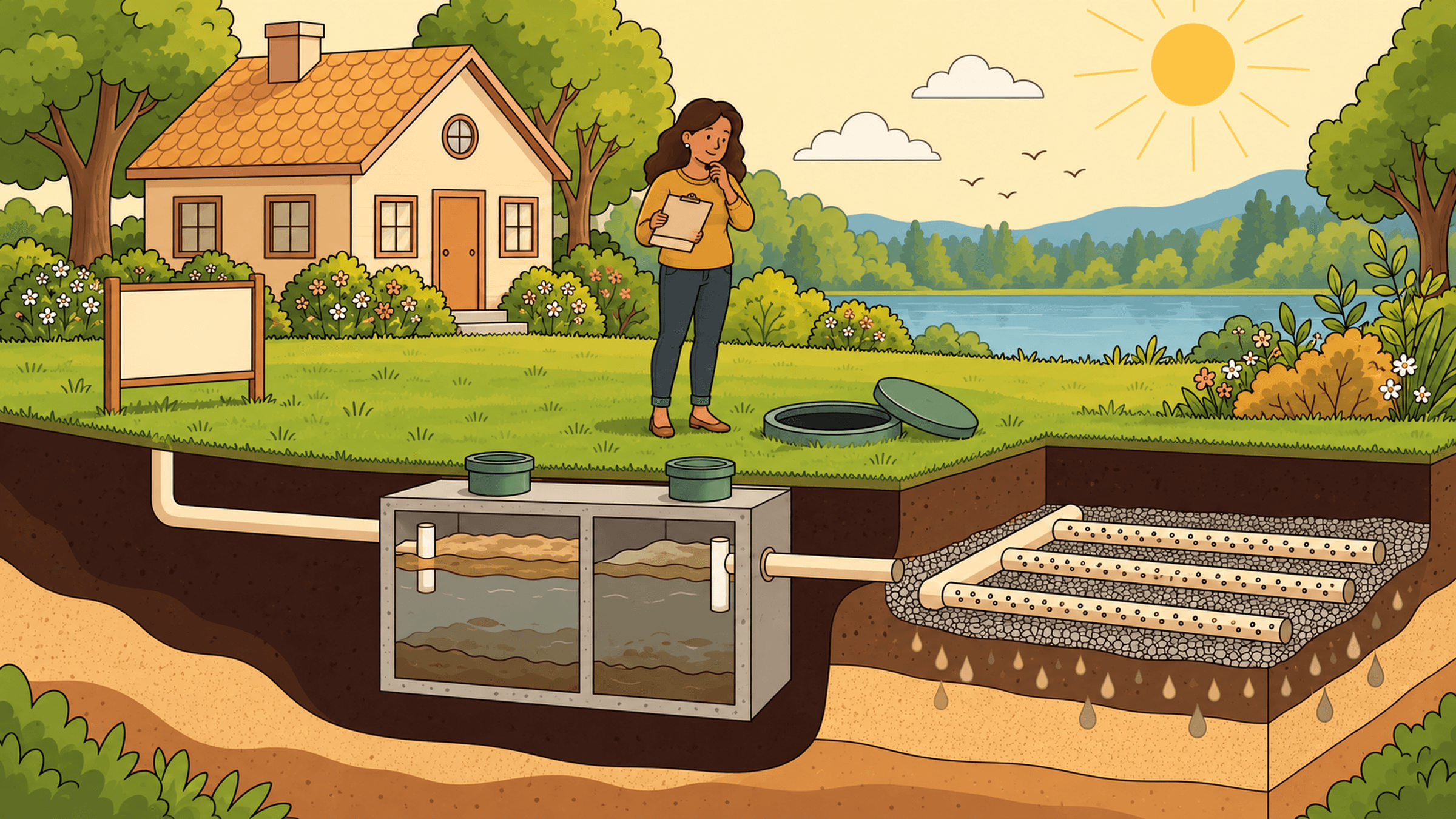
Before you buy a house with septic, get the records, a professional septic inspection and the tank size. What the inspection covers and the red flags.
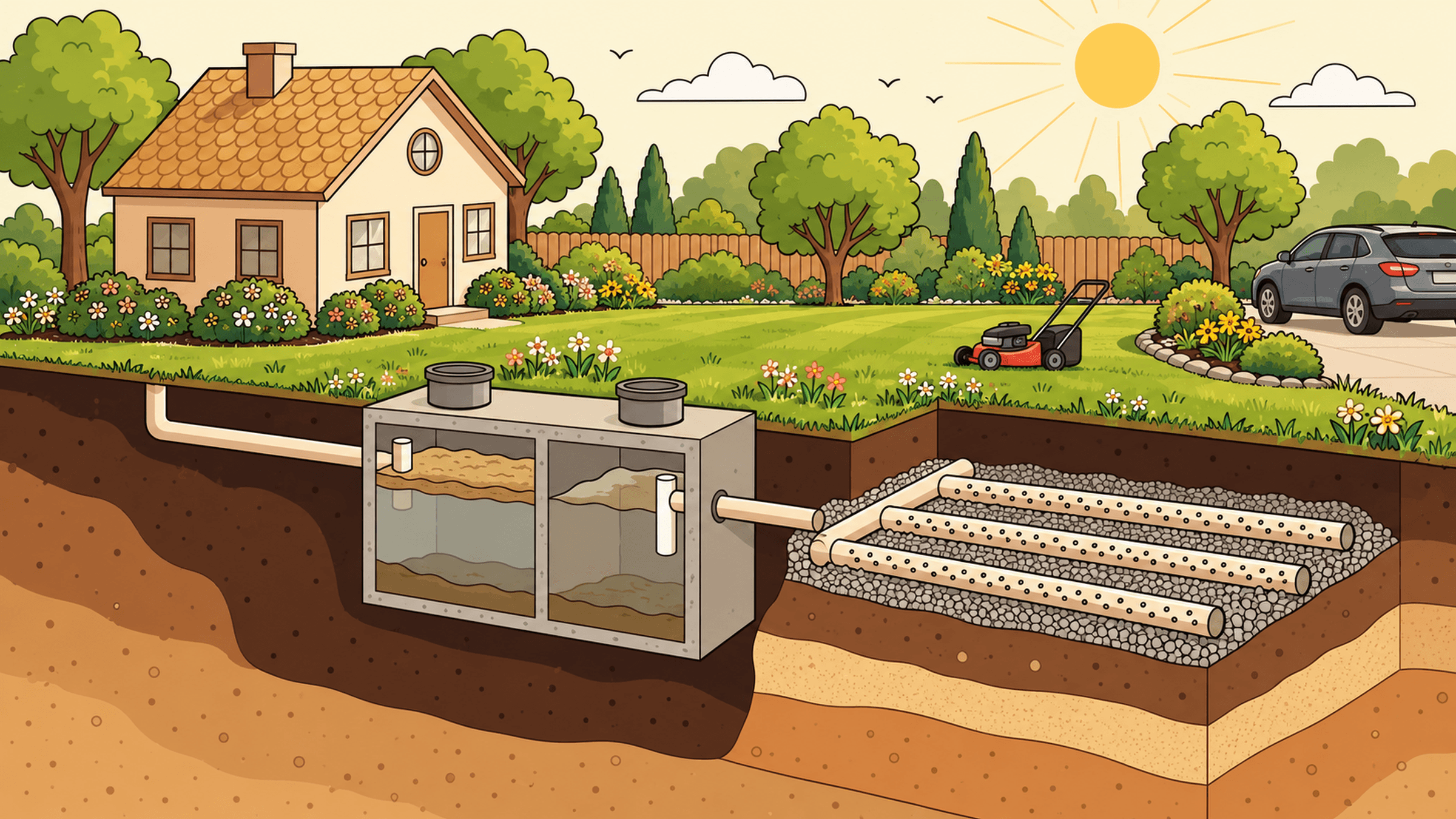
A drain field is the set of buried pipes where soil treats the water from your septic tank. Keep cars, trees and extra water off it, and keep grass on it.
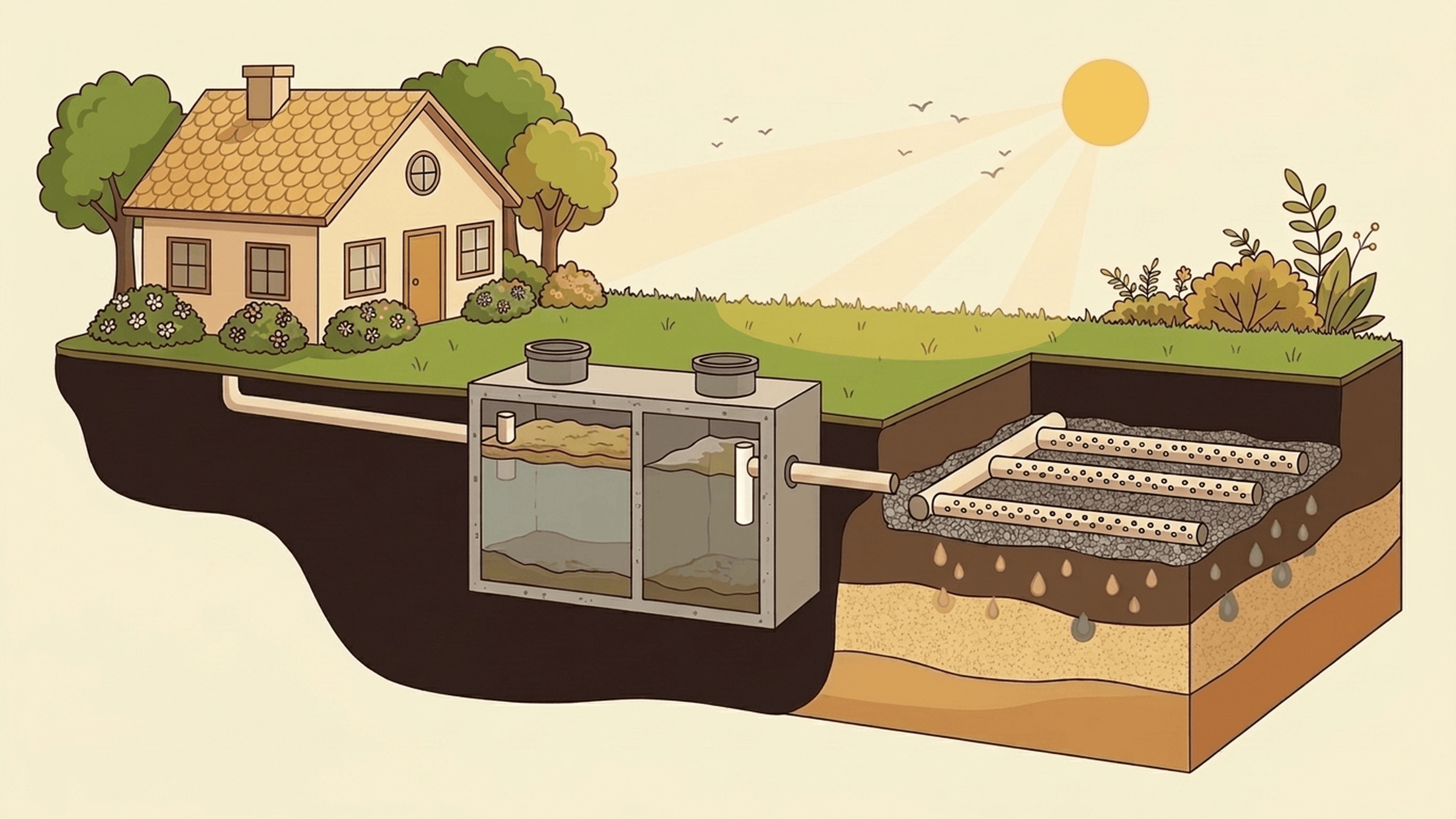
A septic system has two main parts: a tank that separates solids and a drain field where soil treats the liquid. How each step works, in plain English.
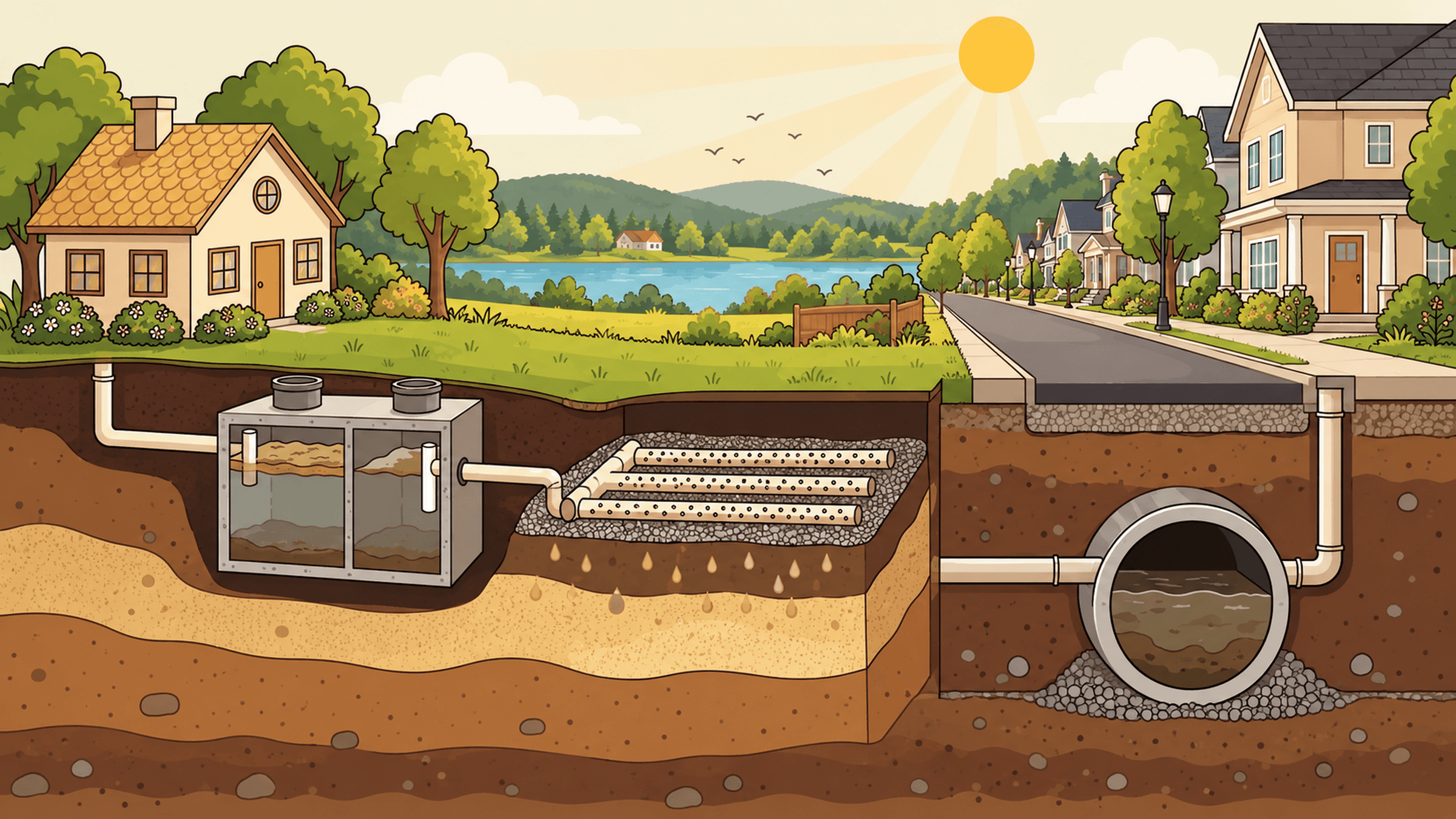
Check your water bill for a sewer charge first. If there isn't one, look at property records, the yard and the county health department to confirm septic.
Pumping & Maintenance
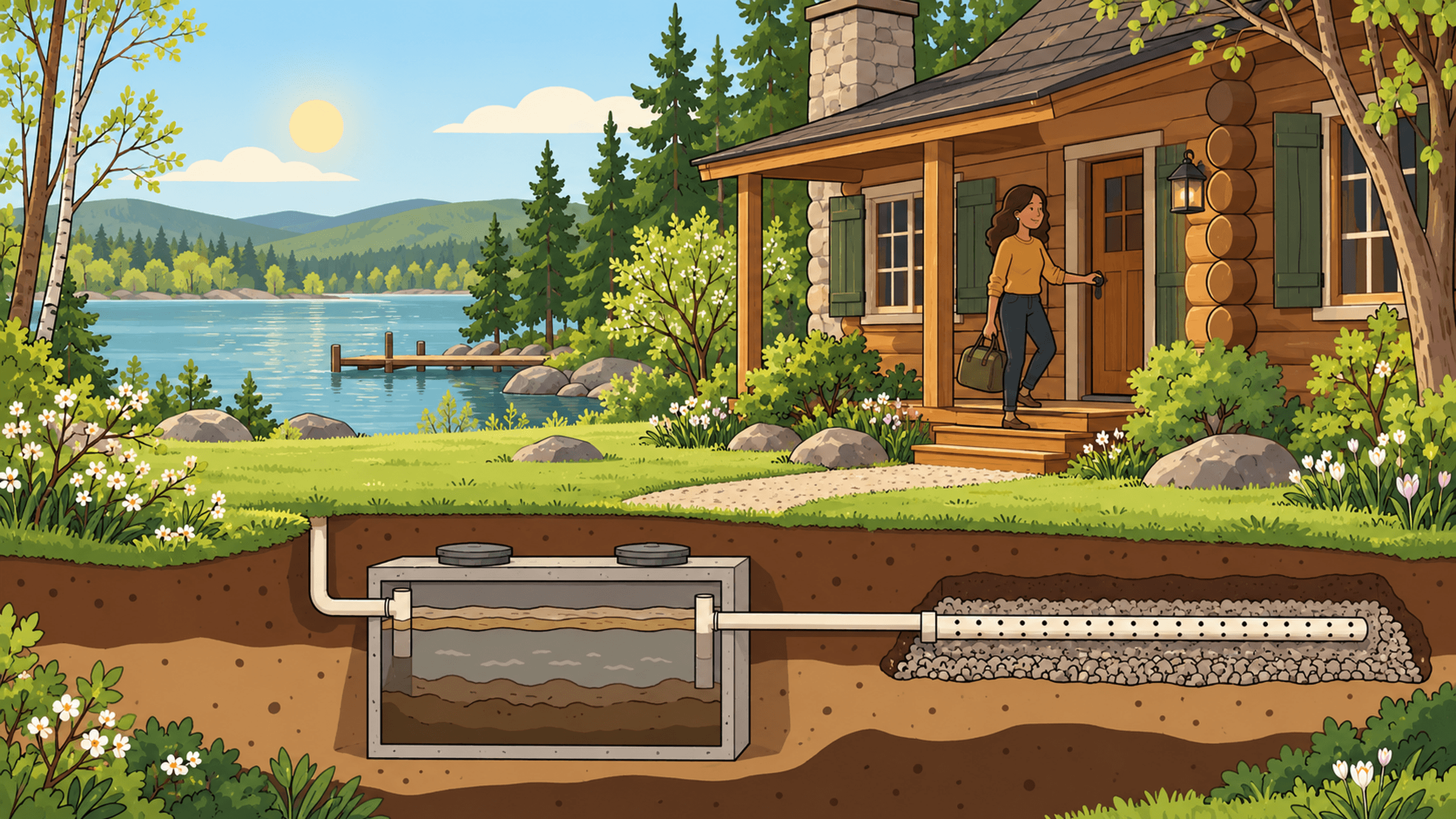
A cabin septic system can sit unused for months without harm. The real risks are freezing, dry drains and crowded weekends. How to close, open and inspect.
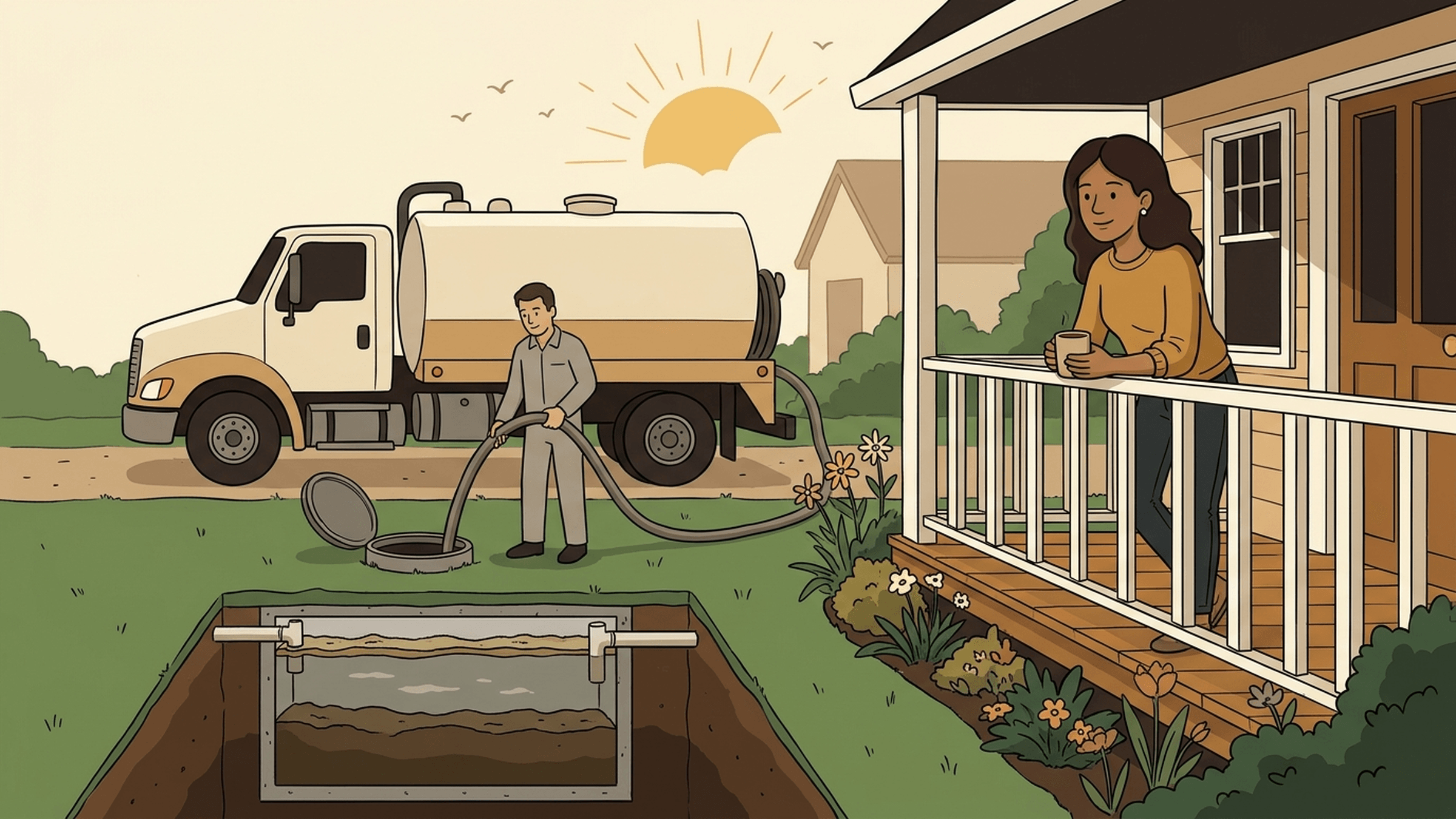
Most septic tanks need pumping every 3 to 5 years. See the interval for your tank size and household, what makes it shorter, and how a pro checks it.
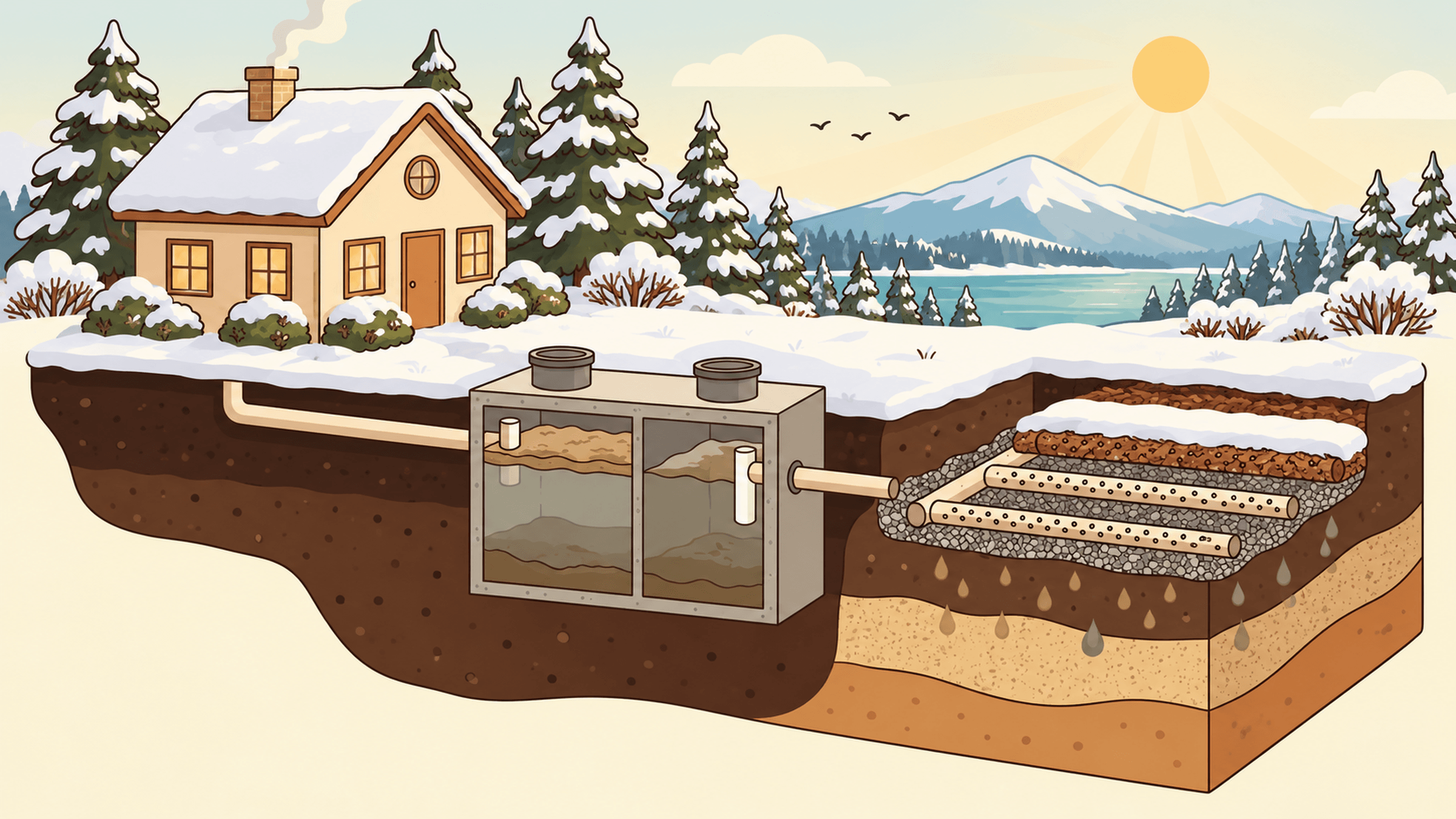
Yes, septic systems can freeze, usually in the pipes during cold winters with little snow. How to prevent it, and what to do (and avoid) if yours freezes.
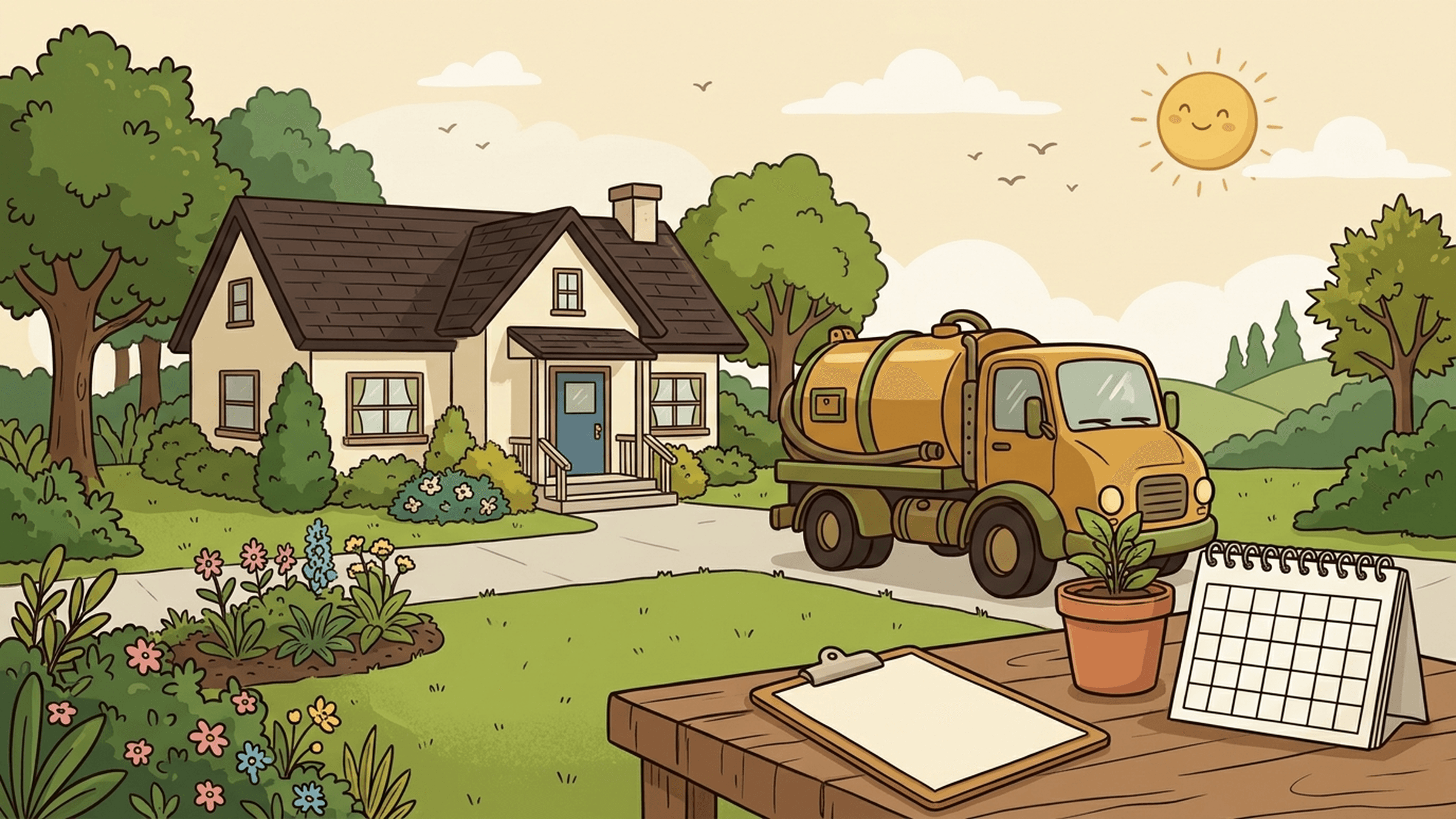
Septic tank pumping costs about $290 to $560 in 2026, around $420 on average. See prices by tank size, what raises the bill and what inspections cost.
Problems & Warning Signs
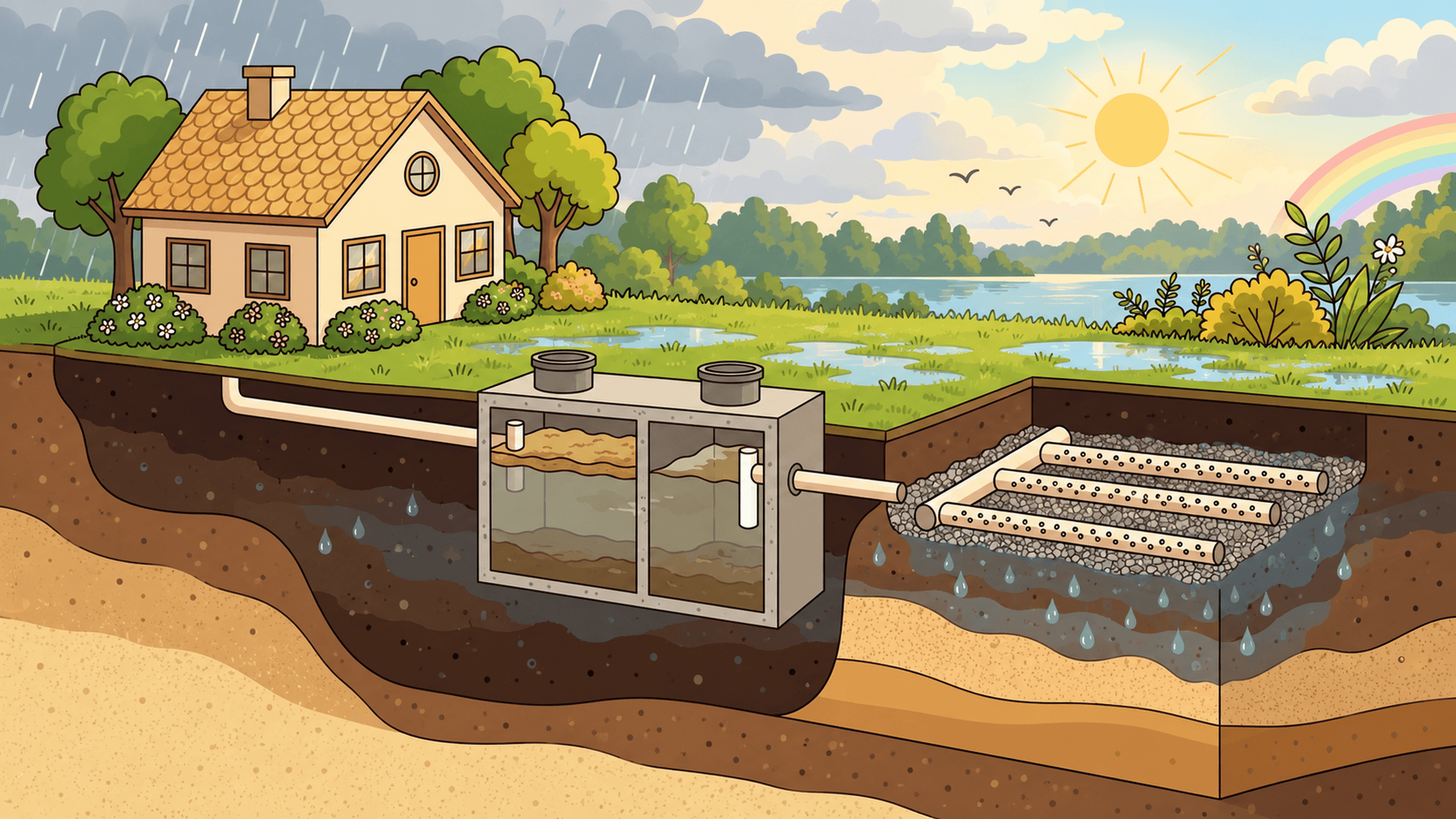
Heavy rain can saturate the drain field so drains slow or back up. What to do during and after a flood: use less water, wait to pump, test your well.

A sewage smell indoors usually comes from a dry drain trap, a toilet seal or a blocked vent, not a failing tank. How to find the cause and when to call.
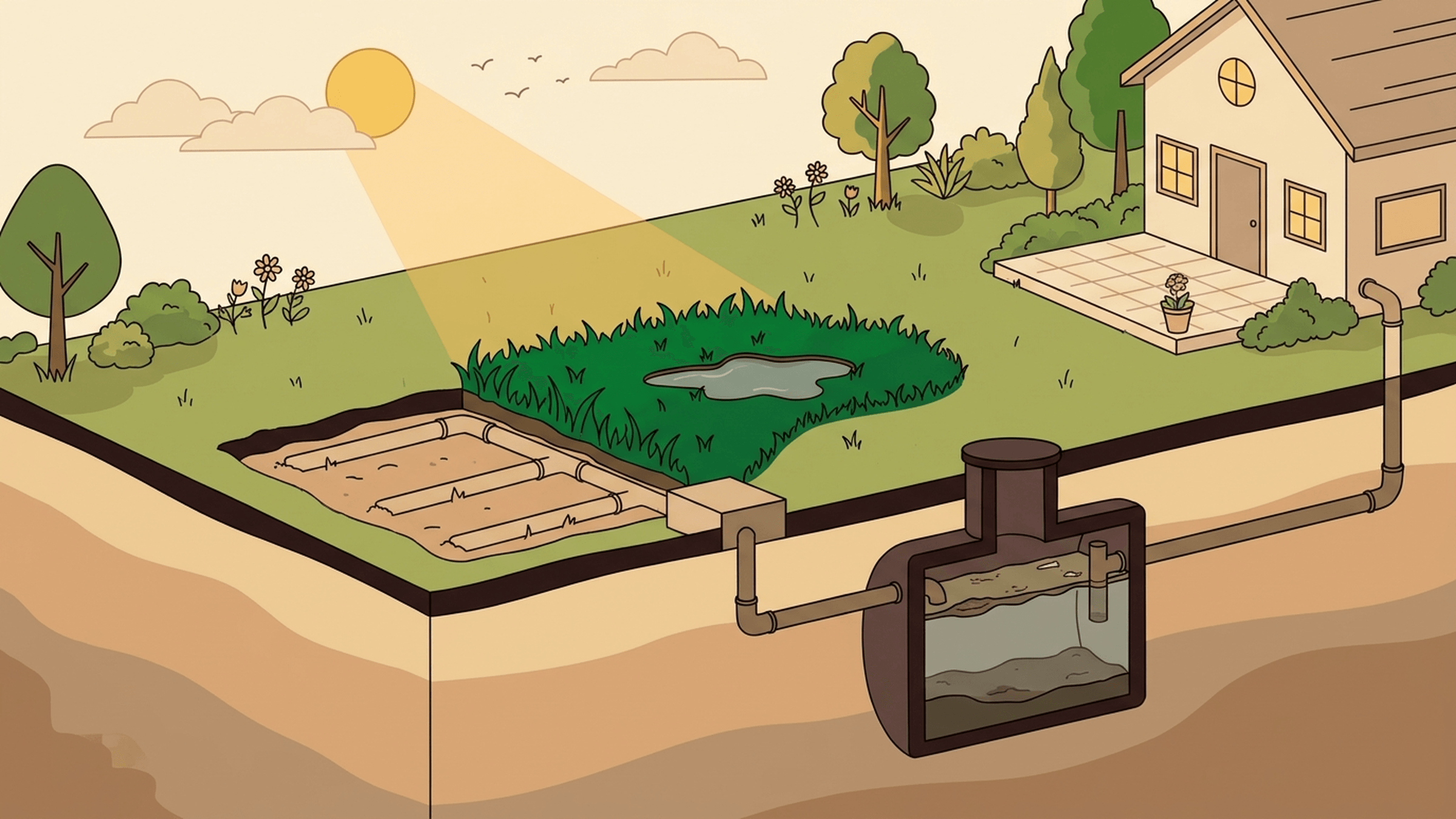
Slow drains, gurgling pipes, odors outside and green, soggy grass over the drain field are the main signs. What they mean and why waiting costs more.
Septic-Safe Home
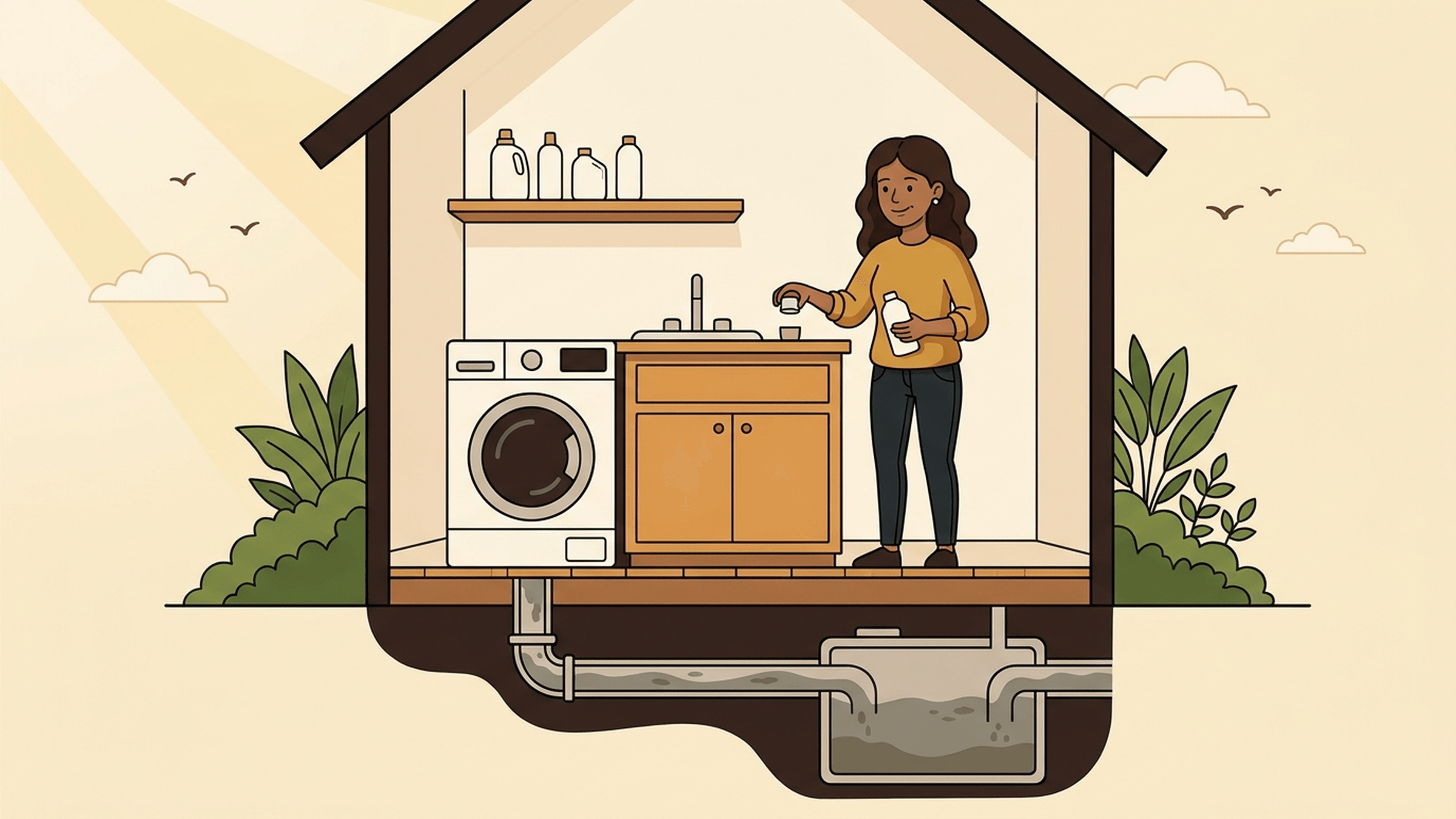
Yes, in normal household amounts used as directed. Large or daily doses of bleach and antibacterial cleaners can harm the bacteria your septic tank needs.
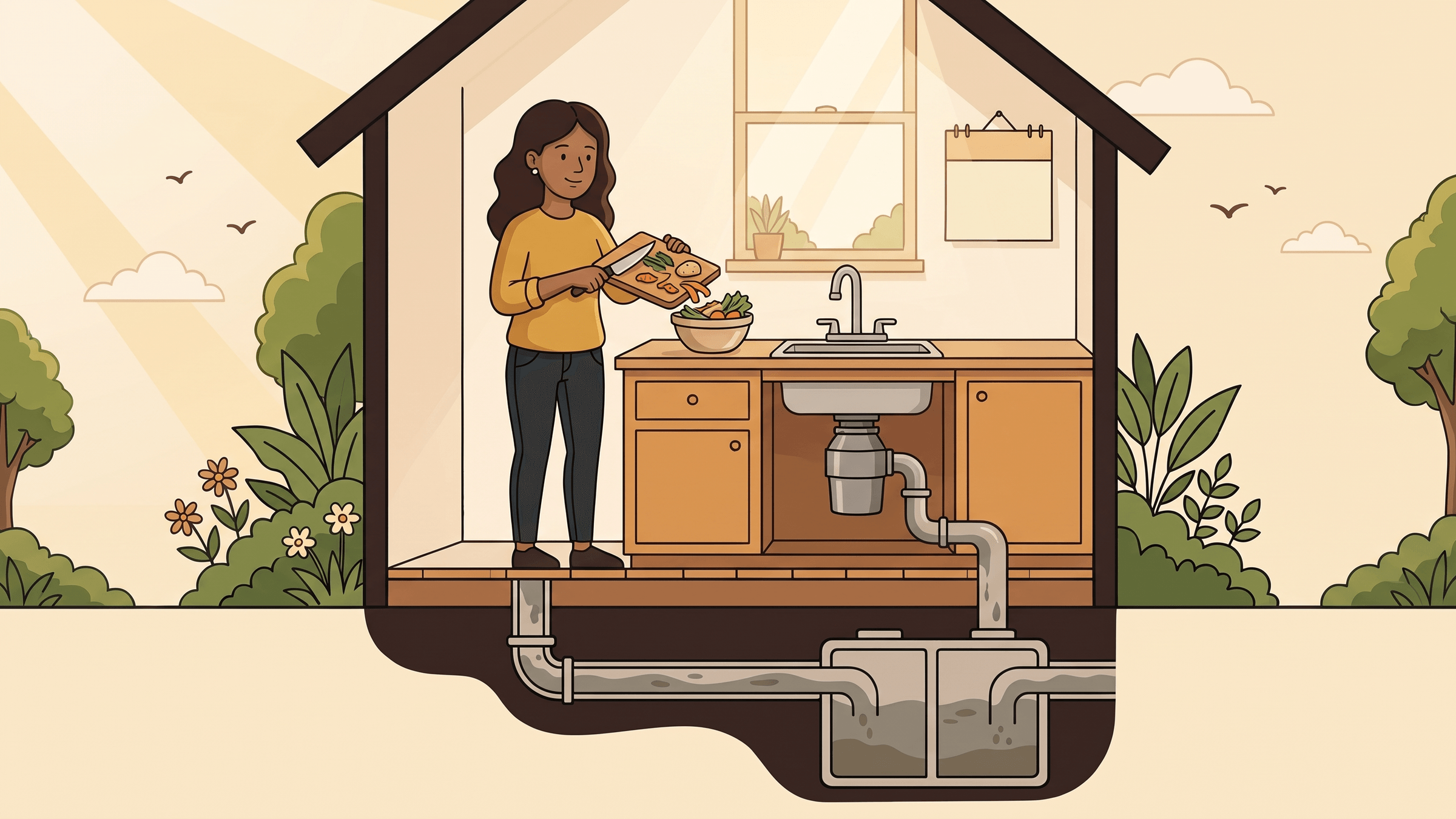
You can, but a garbage disposal adds food solids to the tank, so you'll need to pump more often. How much sooner, what never goes in, and better habits.
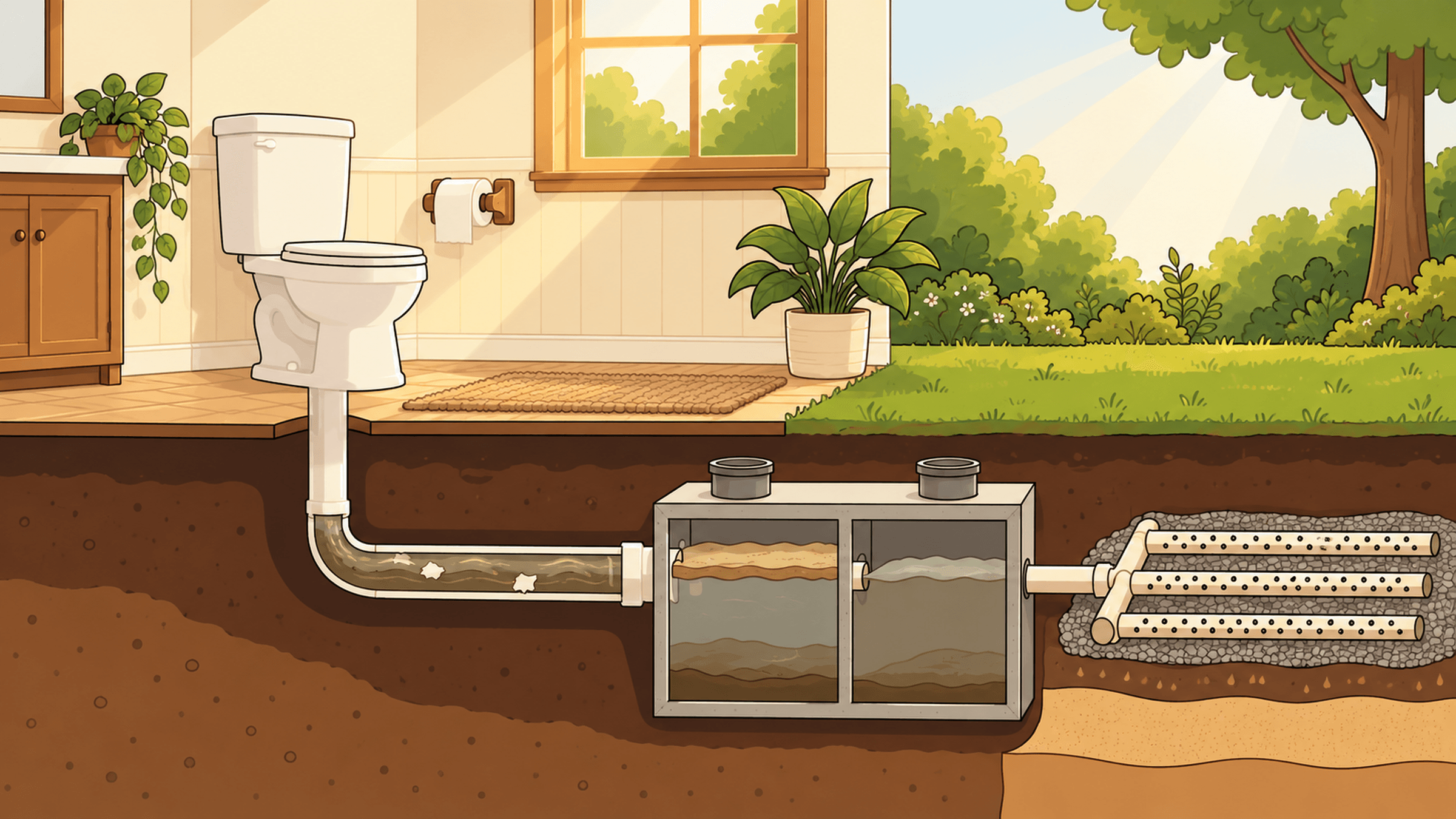
Regular toilet paper is made to break apart in water and is safe for septic systems. Wipes, paper towels and tissues are the real problem, even flushable ones.
Treatments & Additives
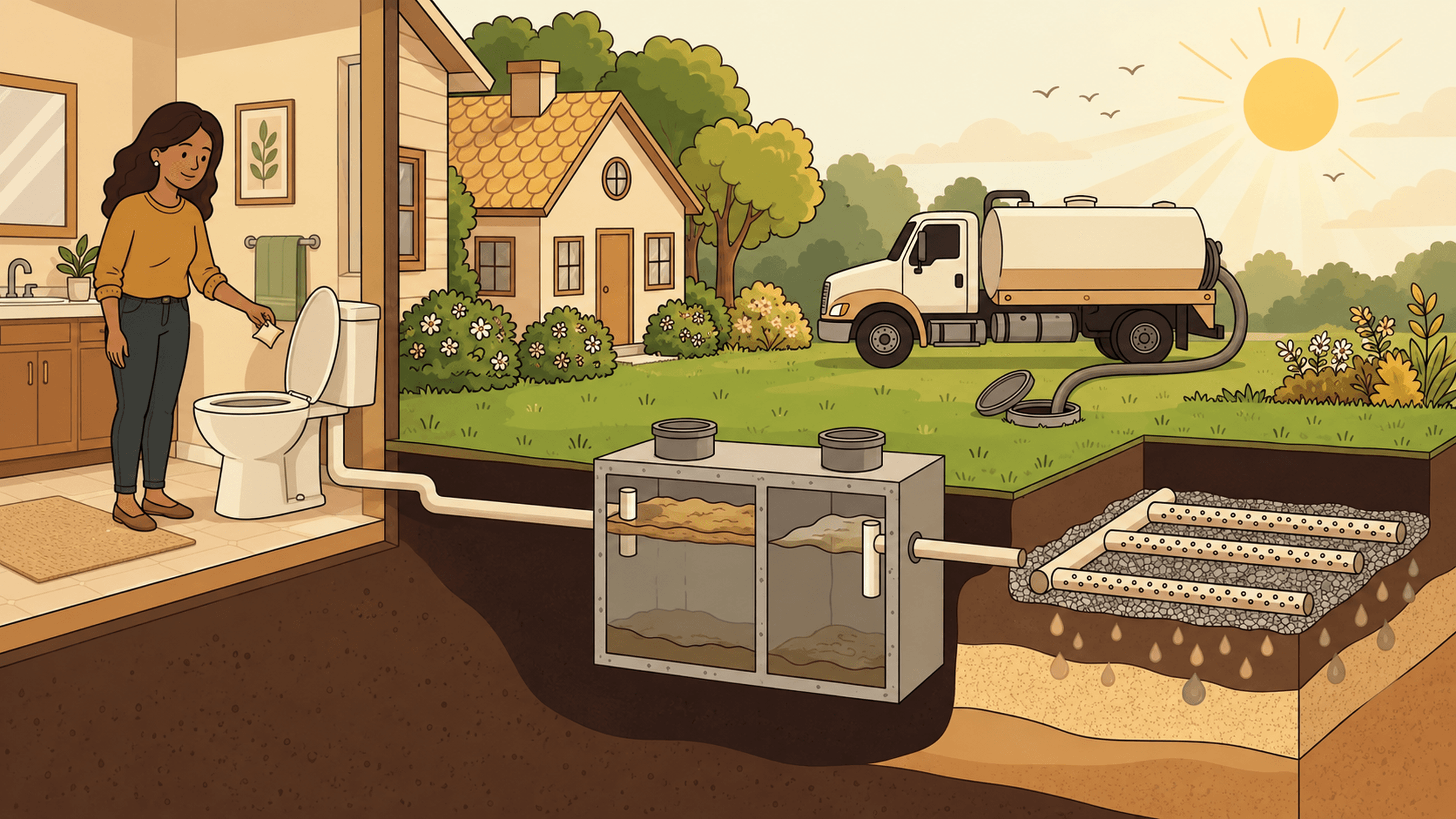
What the EPA and university experts say about septic additives, what no treatment can do, and how to choose one if you decide to use it anyway.
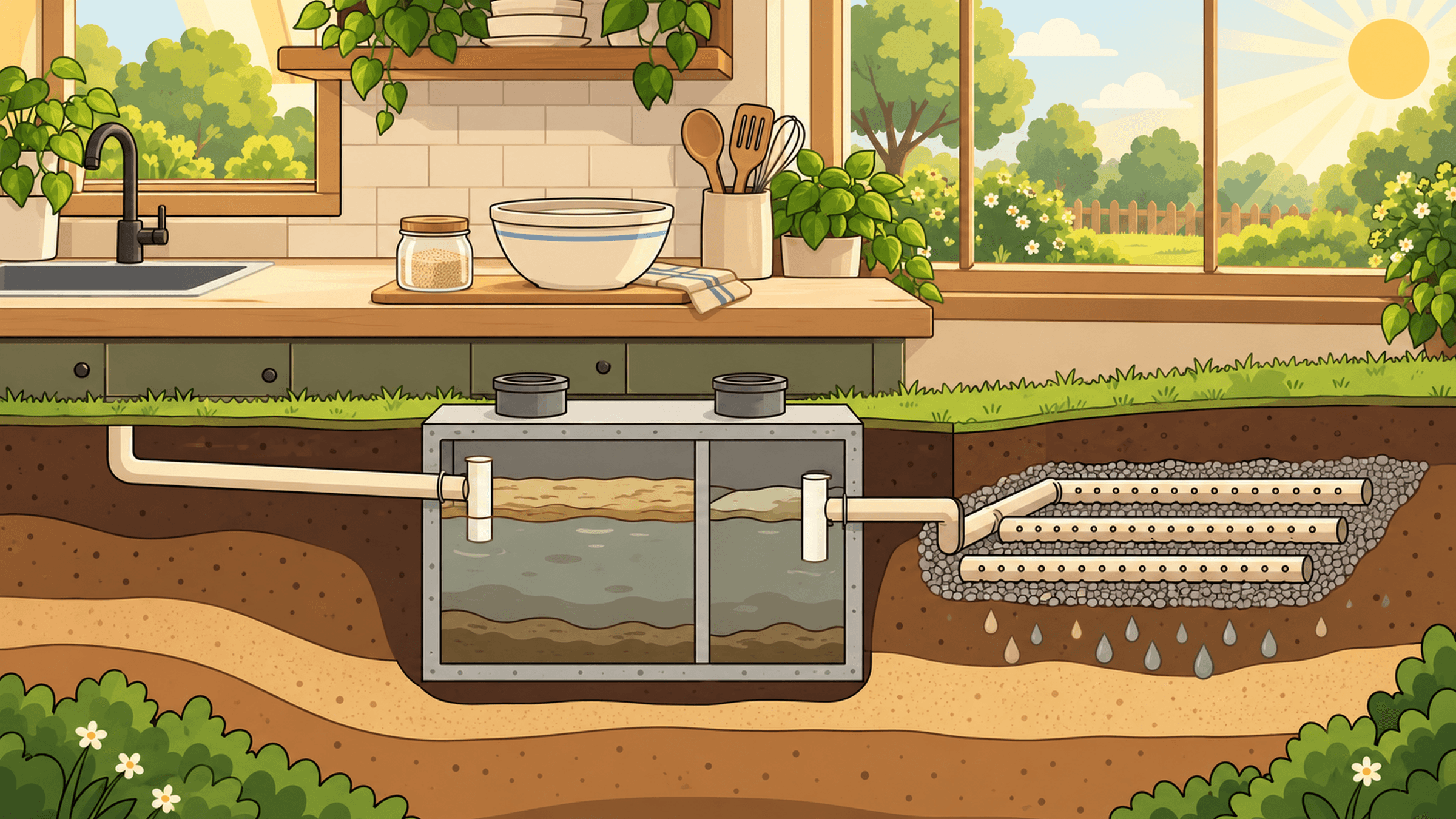
Yeast is a popular home remedy for septic tanks, but experts find no research showing it helps. It is unlikely to harm the tank, and it never replaces pumping.
RV & Boat Tanks

Most boat holding tank odor comes from old hoses, a blocked vent or waste left too long. How to clean the tank, when to pump out and the US no-discharge rules.
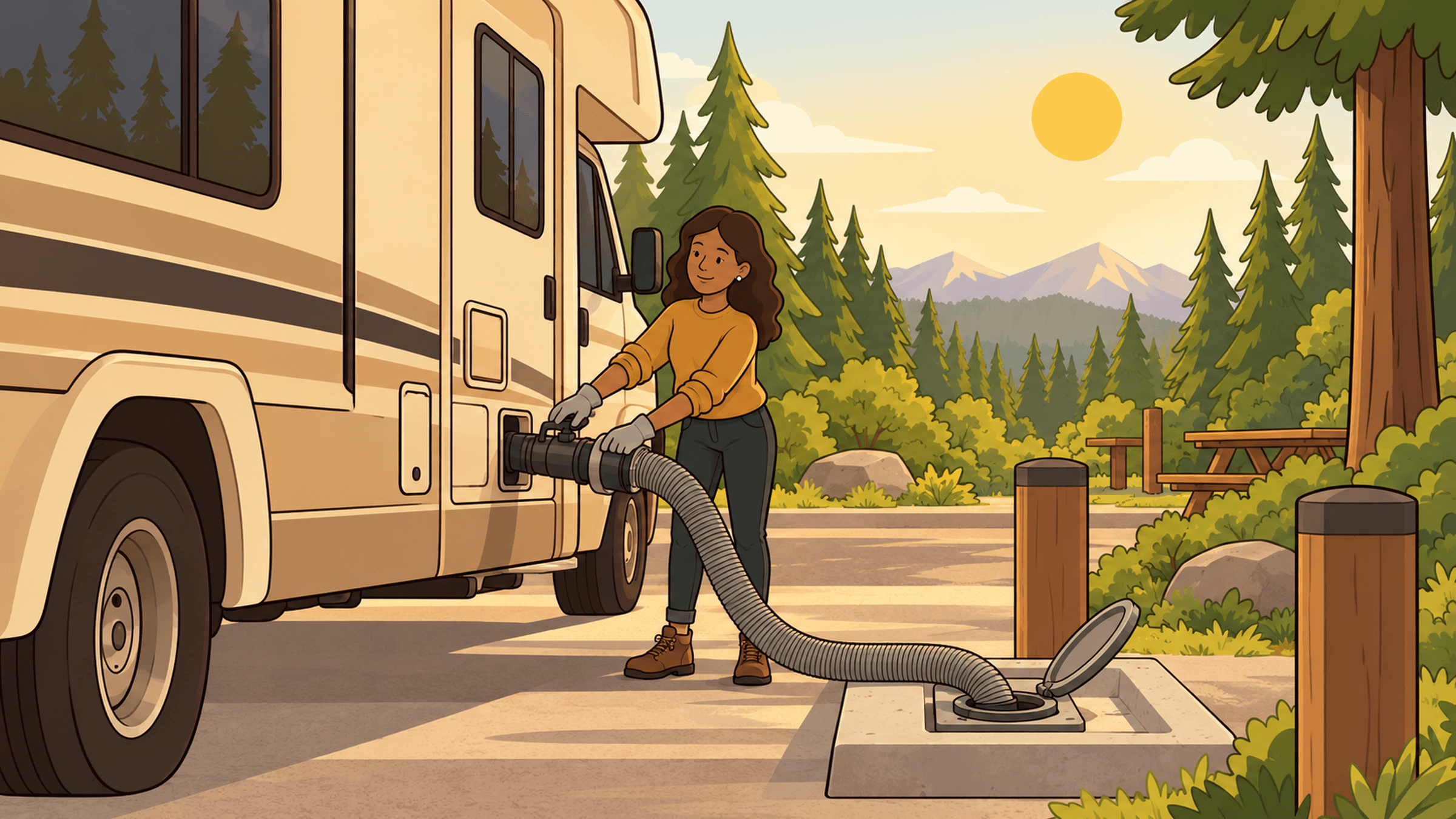
Dump your RV black tank when it is half full or more, not on a fixed day count. How much water to add, safe dumping steps and dump station etiquette.

An RV black tank smell usually comes from a dry toilet bowl, a worn seal, a blocked roof vent or a valve left open. How to find the cause and fix it.
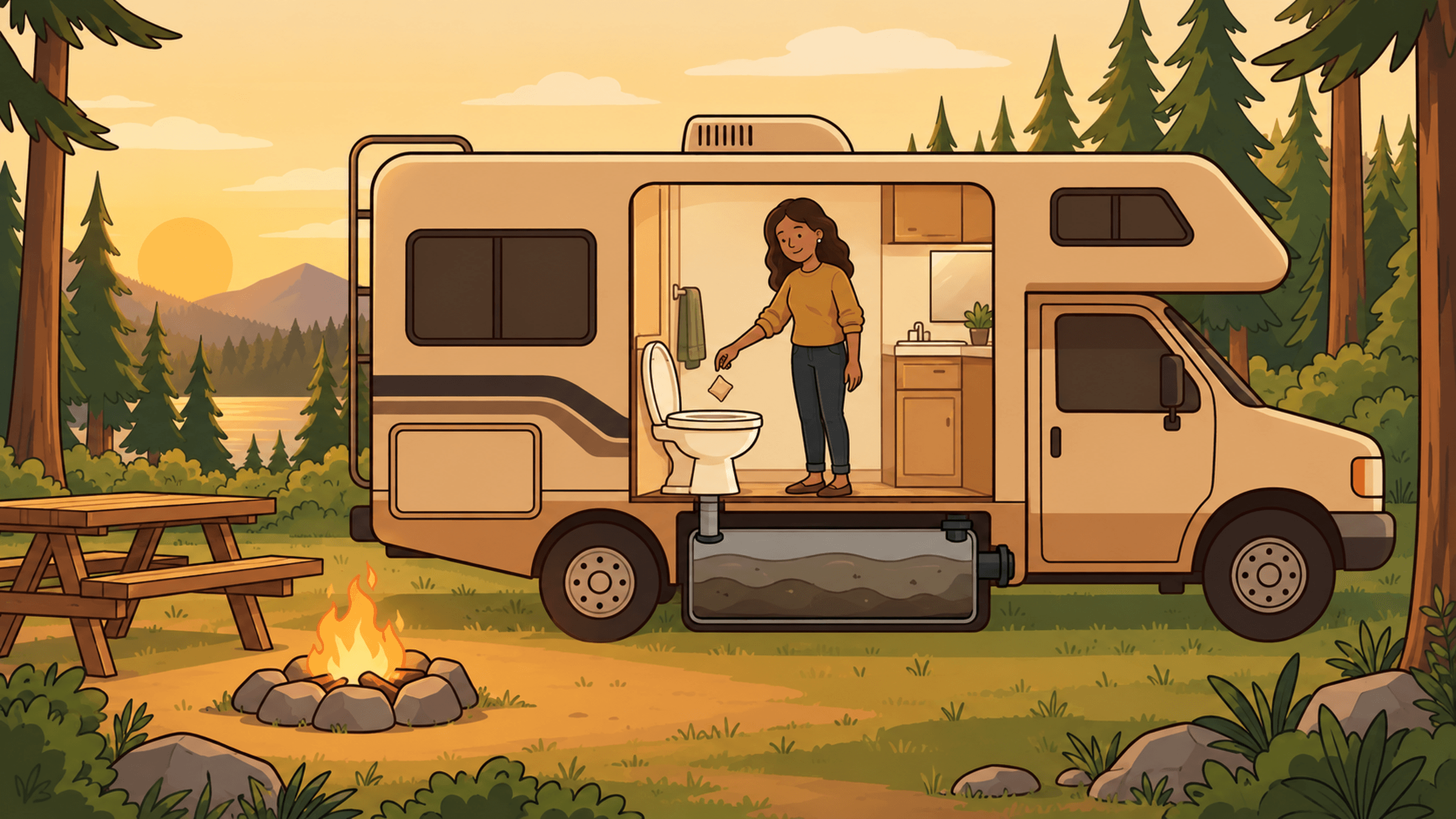
Treat an RV black tank with water, RV toilet paper and a closed valve. Why bleach and formaldehyde products cause trouble at campground septic systems.